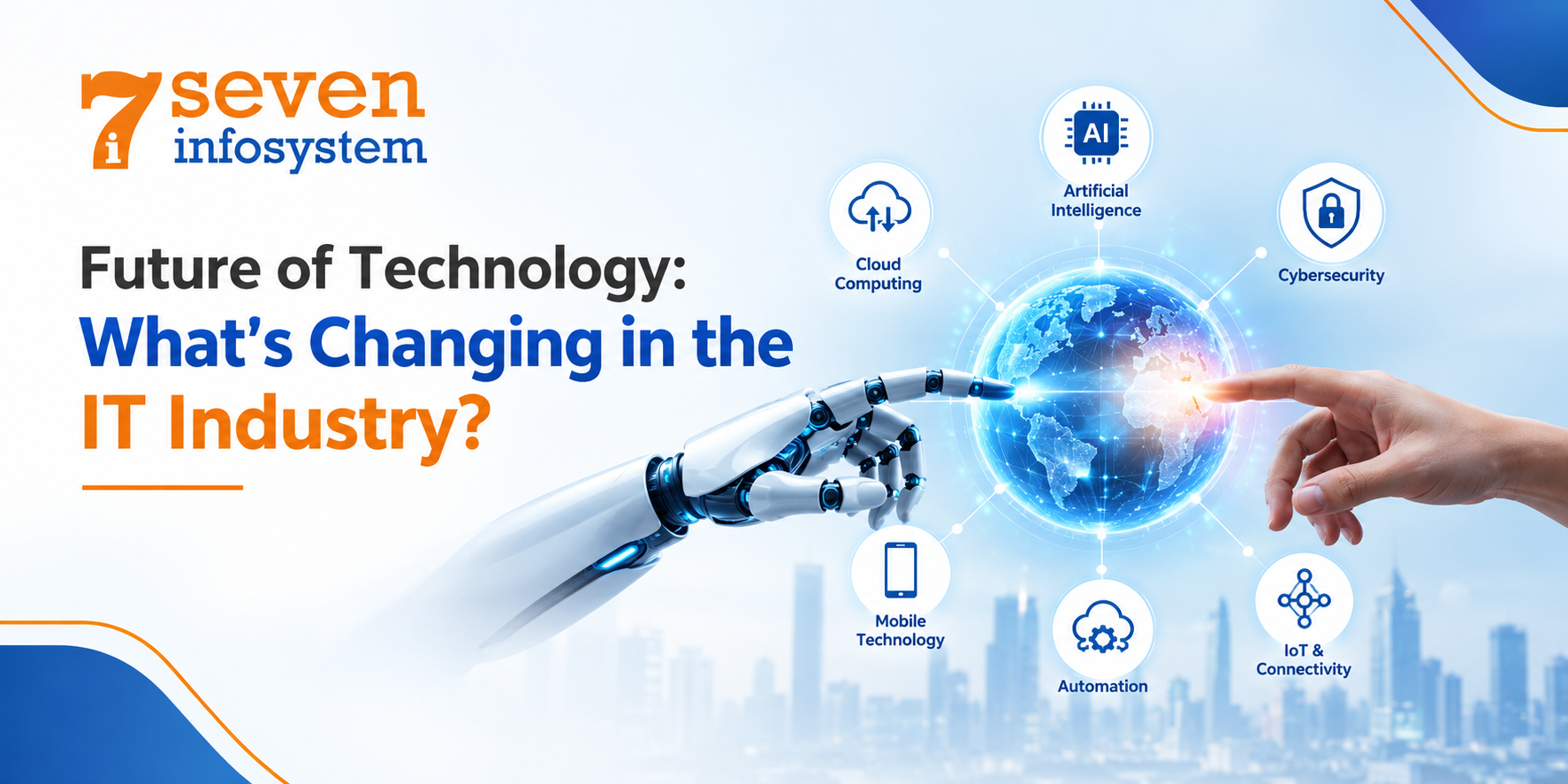
Future of Technology: What's Changing in the IT Industry?
Discover the Future of Technology, from AI and automation to software development and cybersecurity, shaping the next generation of IT.
Introduction
Not long ago, people viewed information technology as a department that repaired computers and maintained servers. Today, however, technology drives almost every business operation, from product manufacturing to customer service. As a result, technological changes happen so quickly that yesterday's innovations can become today's everyday tools.
Therefore, businesses must understand where technology is heading and how these changes will affect their growth. According to the Latest IT Trends, the Future of Technology will bring humans and intelligent software closer together. Moreover, connected machines will exchange data automatically, while businesses will use virtual simulations to test entire factories before making real-world changes.
From a practical perspective, the Future of Technology offers exciting opportunities for businesses and individuals alike. In this article, we will explore important Emerging Technology Trends, explain how they influence our daily lives, and share simple strategies to help businesses prepare for upcoming changes in the IT industry.
What Is the Future of Technology?
Technology is evolving from a tool that people simply use into a smart system that works alongside them. Traditionally, software followed every command users gave it, one click at a time. However, modern web systems can learn from data, identify patterns, and suggest useful solutions. They can also complete entire tasks with minimal human involvement. As a result, technology helps people work faster, make better decisions, and improve productivity.
Three forces are driving this change together:
Computing is getting cheaper. Cloud computing technologies have made available to a tiny startup the same computing power that only big corporations could buy a decade ago.
More and more data. Phones, sensors, websites, and smart machines provide a continuous flow of information that companies can use for their benefit.
Better algorithms. Progress in machine learning allows turning all the data into valuable insights and decisions.
Why the Future of Information Technology Looks Different
The Future of Information Technology no longer depends on owning hardware. Instead, businesses choose flexible cloud-based solutions, connect different systems, and replace tools as their needs change. As a result, IT specialists spend less time maintaining infrastructure and more time focusing on business strategy, cybersecurity, and supporting other departments.
Moreover, information security plays a more important role than ever before. As businesses connect more systems and share more data, they also face greater security risks. Therefore, companies are adopting zero-trust security models, stronger identity verification, and continuous system monitoring. These security measures help businesses protect sensitive information, prevent unauthorized access, and maintain safer digital operations.
Digital Technology Trends Worth Watching
There are some particular Digital Technology Trends that are recurring throughout different industries. Cloud native applications, edge computing that processes data closer to its source, low-code platforms and energy efficiency of computing are among those trends that change the way companies think about their IT budget planning.
None of these trends exist on their own. They feed into each other. Together they lay the groundwork for the bigger shifts covered below.
Latest IT Trends Changing the Industry
Every year, new Upcoming Trends in Technology emerge and attract attention. However, some trends have already proven their value and gained widespread adoption. As a result, businesses are actively investing in these technologies to improve efficiency, reduce costs, and stay competitive.
Artificial Intelligence Trends Leading the Way
Artificial intelligence plays a major role in shaping the Future IT Trends. Today, Artificial Intelligence Trends go far beyond chatbots that answer simple questions. AI algorithms can now generate and summarize text, analyze images, review contracts, write code, and complete multiple tasks across different applications. As a result, businesses can save time, improve productivity, and make better decisions.
One major development is the rise of AI agents. These intelligent systems can understand a prompt, plan tasks, use different tools, review their work, and deliver results with minimal human involvement. For example, a sales team can use an AI agent to research potential customers and prepare personalized emails. Similarly, a finance team can use AI agents to match invoices with purchase orders and identify errors quickly.
However, the Future of Artificial Intelligence will depend on more than advanced capabilities. Businesses must also focus on trust, security, and transparency. They need AI solutions that protect sensitive data, explain their decisions, and follow company policies and industry regulations. Therefore, organizations that combine AI innovation with responsible practices will be better prepared for the future.
AI in Business: From Experiment to Everyday Tool
Just a few years ago, AI in Business typically referred to a pilot initiative that was being done somewhere in the innovation labs. That has changed rapidly. Marketing initiatives rely on AI to compose campaigns and run message testing. The customer support functions rely on AI to answer the frequently asked questions automatically while escalating complex cases to the right people.
The companies seeing the value aren't always the ones, with the biggest budgets. They're the ones that picked a problem, tracked the results and expanded what worked.
AI-Powered Automation and Business Process Automation
Business Process Automation has existed for many years. It is useful for routine tasks which can be automated through certain rules, for example, data entry from forms to the database and sending a reminder once the invoice becomes overdue. However, the problem was that the system could not cope in case of exceptions.
With the development of AI-Powered Automation, such limitations became things of the past. For instance, the new system can read and comprehend the message written by the client, find out his/her account and perform a certain action further. Also, the system can analyze invoices with different layouts, detect abnormal expenses and sort support tickets based on their priority. Thus, the system copes with those exceptions that require human intervention in the old way.
Humans still remain in the process but become responsible only for making risky decisions while the system deals with routine actions.
AI Software Development and the Future of Software Development
Developers know these changes firsthand. Modern AI Software Development tools generate code while developers write it, write test cases, describe foreign codebases, and fix bugs. Moreover, some development teams allow AI agents to do everything starting from analyzing an issue and ending up creating a pull request.
What then is the Future of Software Development? Coders will have to deal less with boilerplates and more with design and architecture issues, reviewing results created by AI and figuring out what exactly the user needs. Clear mindset and proper testing practices will be even more important. Being able to write code will not be useless, but the role itself will change significantly.
Web Development Trends to Know
And the web does not stand still either. Important Web Development Trends are as follows:
AI-assisted design and coding that turns rough ideas or sketches into working page layouts.
Progressive web apps that load fast, work offline, and feel like native mobile apps.
Speed and accessibility first, because both users and search engines reward sites that load quickly and work for everyone.
Headless architecture, where content, commerce, and front-end design are managed separately so each can change without breaking the others.
Conversational interfaces, as more sites add AI assistants that help visitors find answers by digging through menus.
The takeaway is simple: a website today is not a mere digital brochure. It is a powerful tool for sales, support, and customer insights.
The Internet of Things Keeps Growing
The Internet of Things connects physical items including machines, cars, meters, wearables, and buildings with the internet in order to exchange data. In the manufacturing industry, sensors measure temperature and vibration to detect potential breakdowns in advance. In retail, smart shelves constantly observe inventory levels. In medicine, wearables assist doctors in tracking patients' health status remotely. At farms, sensors embedded into soil reveal when and where crops require watering.
When you combine the Internet of Things, with intelligence and edge computing things get even smarter. Devices can act on their own. They don’t need to send data to a server and wait for instructions. For example a machine can shut itself down the moment it starts overheating. No delays. No waiting. Fast safe action. This makes systems more reliable and efficient.
Digital Twin Technology Moves Into the Mainstream
Digital Twin Technology refers to creating a real-time virtual replica of any physical asset, process or even an entire city. The technology is based on real-time data provided by IoT sensors.
Engineers use digital twins to simulate potential changes in order to avoid making mistakes in real-life applications. A manufacturing company can simulate a new layout of its production line and identify bottlenecks there. A city can assess how the traffic will be affected by building a new road in it. A hospital can create a model of patient flows and reduce waiting time there. This way, companies save money and reduce risks because errors occur in the simulation, not in real life.
Custom Software Development Becomes More Accessible
With AI speeding up the build process Custom Software Development is now within reach for small and mid‑sized businesses. In the past a lot of companies settled for off‑the‑shelf software because building their own was slow and costly. They ended up bending their processes to fit the tool.
Now an app that works the way a business operates can be created in much less time. That is very useful for logistics companies, clinics, manufacturers and other organizations, with processes where standard tools do not work well. Custom solutions also help in linking systems and keeping all data in one place.
Other Latest Technology Innovations on the Horizon
Other Latest Technology Innovations deserve a quick mention. Quantum computing is still early. Is making steady progress on hard problems like materials research. Extended reality is proving useful, for hands-on training and remote support. Faster wireless networks are giving connected devices the speed and reliability they need.
How the Future of Technology Is Changing Business
All these technology trends have a direct impact on the work of business leaders. So how are the changes influencing the way businesses work?
Faster Decisions Backed by Data
Real-time dashboards, AI-powered predictions, and automated summaries eliminate the need to wait weeks for reports to reach managers. Instead, business leaders can access important information quickly, understand market changes, and make informed decisions. For example, retailers can monitor product demand, replenish popular items on time, and adjust pricing based on customer behavior.
Moreover, data-driven insights help businesses identify potential problems before they affect daily operations. As a result, teams can respond faster, reduce unnecessary costs, and improve overall business performance.
Leaner, More Flexible Operations
Automation helps businesses reduce repetitive tasks, minimize human errors, and give employees more time to focus on work that requires creativity and problem-solving skills. With the right technologies and tools, a smaller team can now handle tasks that previously required many employees. This also helps businesses manage their resources more effectively.
Furthermore, cloud-based platforms and AI-powered tools allow companies to adjust their operations as business needs change. For example, businesses can automate invoice processing, manage customer records, and track project progress without adding unnecessary manual work. Consequently, organizations can improve productivity while keeping their operations flexible.
Better Customer Experiences
The Future of Technology is transforming customer experiences by helping businesses deliver faster responses, personalized recommendations, and seamless digital interactions. AI assistants, faster websites, and connected systems allow companies to meet customer expectations around the clock, rather than limiting support to regular office hours. Moreover, these technologies help businesses provide consistent services across websites, mobile applications, and other digital platforms.
Additionally, AI-powered recommendation systems can suggest products or services based on customer interests and previous interactions. Businesses can also use customer feedback and behavior data to understand expectations and improve their services. As a result, customers enjoy more personalized experiences, while companies can build stronger relationships and improve customer satisfaction.
New Skills and Changing Roles
There is an increasing demand for specialists knowledgeable in artificial intelligence, data management, cloud architecture, cybersecurity, among other technologies. However, today many positions require a combination of technical and business skills. Such qualifications will be the core of the Future of IT Industry workforces since there will always be a need for individuals who can translate tech in simple terms.
Choosing the Right IT Solutions for Businesses
There are a lot of different products that may seem confusing when trying to find appropriate solutions for business processes. The key strategy in choosing IT Solutions for Businesses should be starting with understanding the problems, rather than solutions. What hinders productivity? What makes customers unhappy? What time-consuming tasks exist?
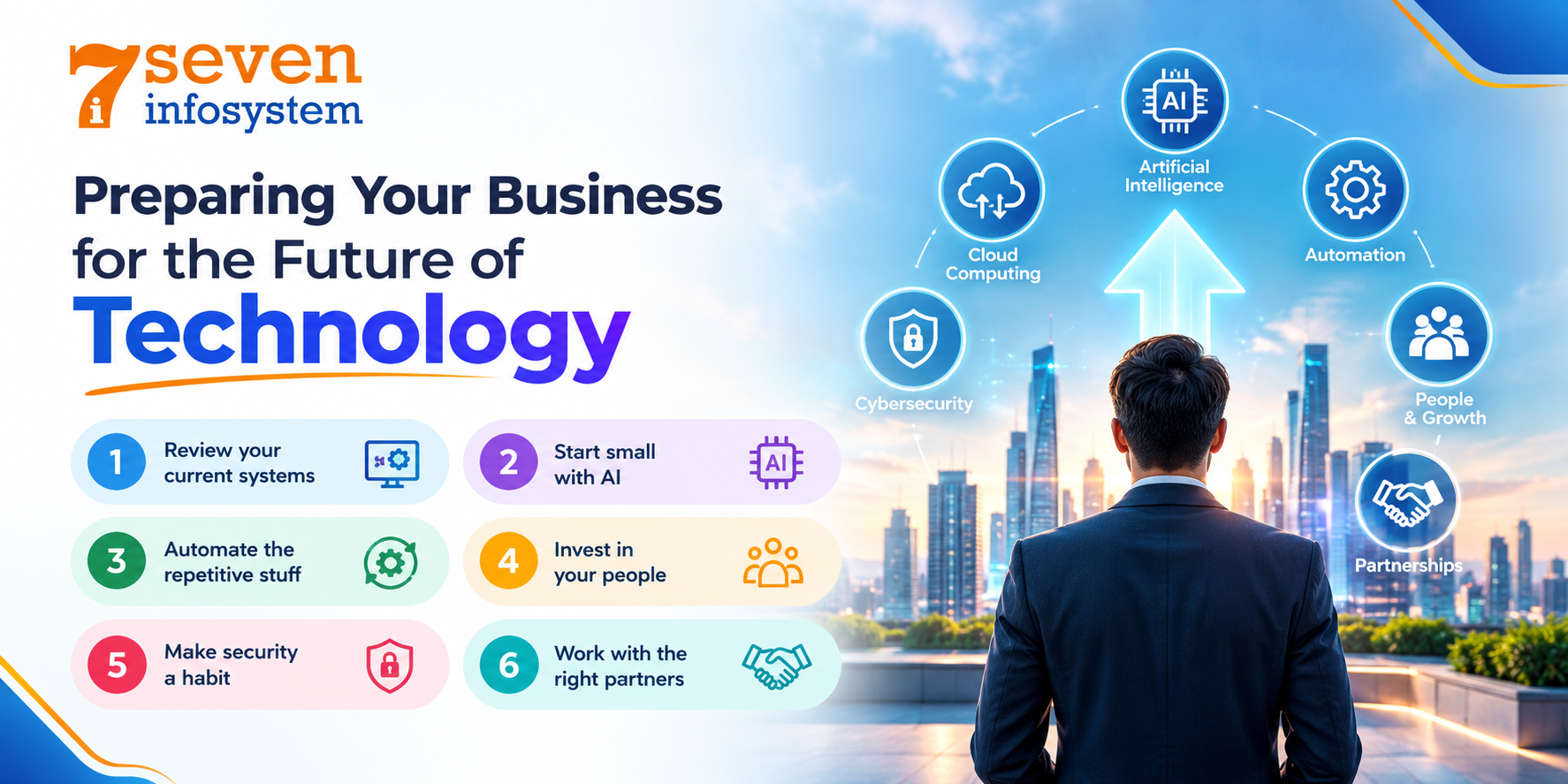
Preparing Your Business for the Future of Technology
A large budget is not required to prepare yourself. Here are a few straightforward steps that will work great for you:
Review your current systems. Find the tools, hand‑made fixes and data walls that slow your team.
Start small with AI. Choose one specific application area, for example, responding to customers' inquiries or analyzing the data. Measure the performance first.
Automate the repetitive stuff. Identify tasks which are performed by the staff regularly and repetitively. Those will likely be easier to automate.
Invest in your people. Give staff time and training to learn new tools. Technology only pays off when people feel confident using it.
Make security a habit. Use sign‑in methods to keep software up to date and set clear rules for how company data may be used with AI tools.
Work with the right partners. A trusted IT partner can help you plan, build, and support solutions without stretching your in-house team too thin.
Conclusion
The pace of change in the IT industry is unprecedented, but its trajectory is well defined – the adoption of artificial intelligence as a regular coworker, the automation of more complex processes, the use of interconnected devices for better decision-making, and modeling in the virtual world to validate ideas and concepts. All of that makes up the Future of the IT Industry.
The good news is that you don't have to adopt everything at. Businesses that stay curious start with problems and build step by step will be in the best position to grow. Keep an eye on the Latest IT Trends test what fits your goals and let technology do the lifting so your people can focus on what they do best.
FAQs
1. What are the latest IT trends in 2026?
The Latest IT Trends include AI agents, AI-Powered Automation, edge computing, the Internet of Things, and Digital Twin Technology. Stronger cybersecurity is also a top priority.
2. How is AI used in business today?
AI in Business helps with customer support, marketing content, sales research, forecasting, and document processing. Most companies start with one task and expand from there.
3. Will AI replace software developers?
No. AI Software Development tools speed up coding, but developers are still needed to design systems, review output, and understand what users really need.
4. What is digital twin technology used for?
It creates a live virtual copy of a machine, process, or place. Companies use it to test changes, predict problems, and improve performance without real-world risk.
5. Why should businesses invest in custom software development?
Custom Software Development builds tools around how your business actually works. It fills gaps left by generic software and makes it easier to connect your existing systems.