Digital Marketing Strategies for Growing Businesses: A Complete Guide
Learn effective digital marketing strategies for growing businesses. Discover proven SEO, content, social media, email, and online marketing tactics to drive growth.
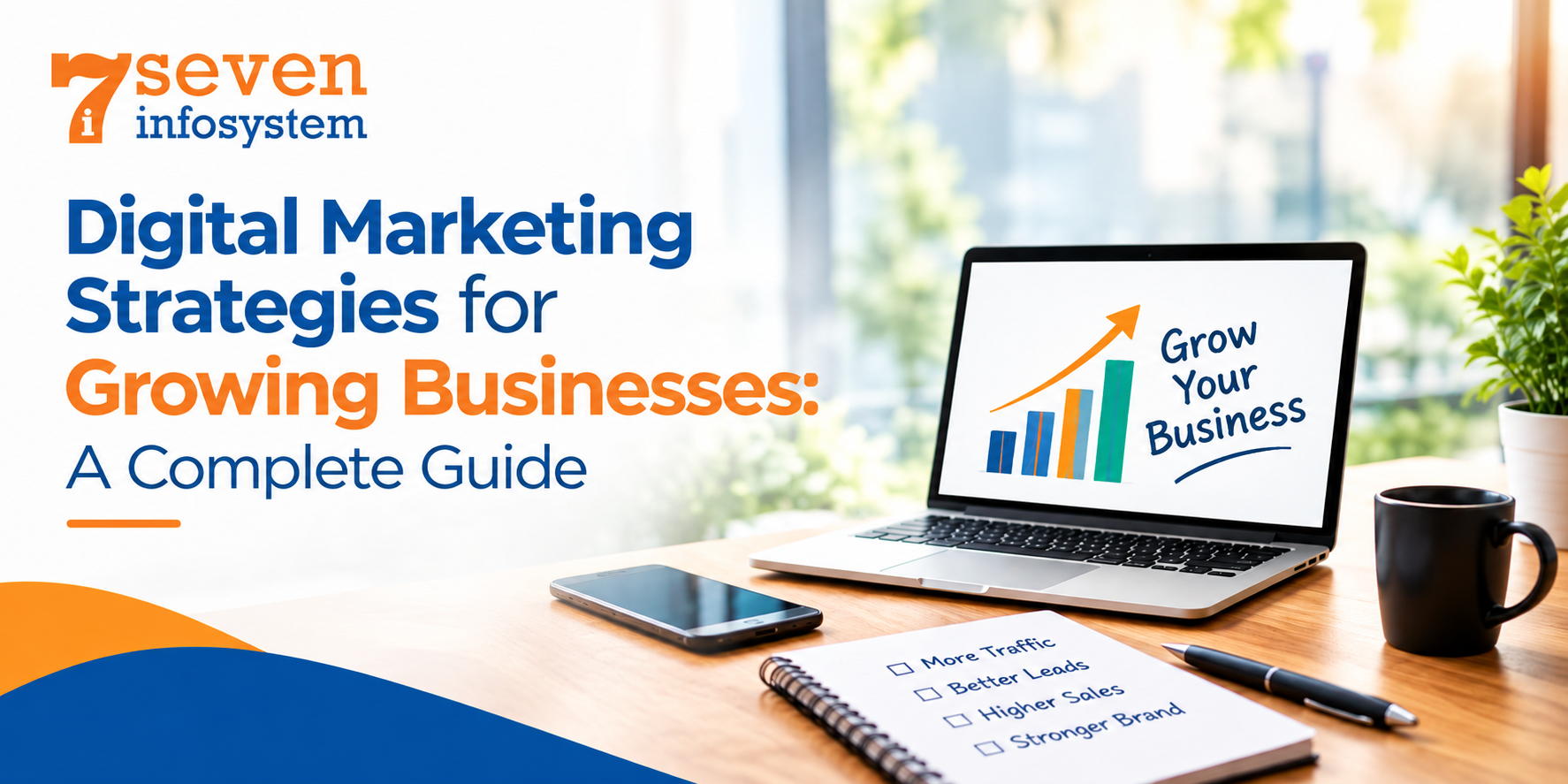
It goes without saying that finding the right audience is no longer limited to advertising, referrals, or selling goods from a store for a growing business. Today's customer researches the Internet, compares companies' offers on websites or social media, reads other people's opinions and reviews, watches product videos, and usually completes a purchase on their phone. Such trends make digital marketing a necessary tool for any modern business development and an effective online marketing strategy for reaching and engaging the right audience.
Any small local business, startup, e-commerce website, or well-established company can attract new customers and maintain connections with existing ones through digital communication channels. At the same time, digital marketing is not all about regular posts and advertising campaigns. There are many more important steps to take, including audience research, creating valuable content, optimizing for SEO, building a reputation, and measuring results.
The best solution is to create a strategy that combines multiple channels. Not everything needs to be tried at once; instead, a company must know where its audience spends time, understand what this audience needs, and develop marketing activities based on the goals achieved.
Why Digital Marketing Matters for Business Growth
Even with the best possible goods or services on the market, a business can fail simply because it cannot reach its target audience. This is where digital marketing helps by positioning an enterprise where consumers search, communicate, and make purchases.
Flexibility is one of its key benefits. With conventional advertising, a significant amount of money must be invested before the campaign's efficiency can be assessed. On the other hand, digital platforms provide extensive data on impressions, clicks, interactions, leads, conversions, and customer behavior.
Businesses can thus make sound decisions based on this data rather than just assumptions.
Moreover, digital marketing provides smaller businesses with an opportunity to compete with bigger companies. A firm operating locally but offering an effective website, good search engine rankings, reviews, and valuable content can attract many customers that it might never reach via conventional advertising.
What matters, however, is not becoming visible online but becoming valuable and trusted by your customers.
Build a Clear Online Identity Before Promoting Your Business
It is advisable to invest in advertising, including social media, only after you have established your online presence.
There needs to be consistency in how you represent yourself through your website, social media profiles, directories, branding, and mode of communication. This has to explain who you are, what you offer, who it is intended for, and why.
A professional online presence will tell clients:
- What your company does
- Who your ideal customer is
- Why your product/service stands out from others
- How the customer can get in touch or buy your product
- Why they should trust your company
- What actions they should take
A website is especially significant because it is where most marketing efforts ultimately lead. Confusing navigation, outdated information, slow-loading pages, and a lack of clear calls to action could negate the impact of your marketing campaigns when customers land on your website from advertisements or search engines.
Consider your digital identity as the basis of all other parts of your digital marketing strategy. The better the basis, the more effective other marketing channels will become.
Define the Audience You Actually Want to Reach
One of the most common mistakes in marketing is attempting to speak to everybody.
Your expanding firm needs to know who can most likely profit from its goods or services. Not only should it include demographic information about your target audience, but you should also know what it wants and needs, how it behaves when buying, the questions it asks, and how it makes decisions.
For example, a company that sells business software will treat its target audience differently if it comprises a startup founder, a marketing manager, and an enterprise technology director.
Audience profiling helps you create more relevant marketing campaigns by letting you know your audience better.
Consider the following questions:
- What is the customer problem that needs to be addressed?
- What type of information do they need before buying?
- What is influencing their decision?
- What can prevent them from buying something?
- What are their online platforms?
- What type of content are they interested in?
- How can you make them trust a new brand?
If your strategy addresses customer needs, your content will become more valuable and your advertising more targeted.
Turn Search Intent Into an SEO Opportunity
Search engine optimization, or SEO for short, is one of the most valuable aspects of digital marketing over time.
People use search engines to solve problems, compare items, find services, learn how something works, and explore brands. Being found by people who directly search for things related to your business can bring a lot of highly relevant traffic to your website.
SEO should not be reduced to simply adding keywords to website content.
The process of search optimization in the modern world is about creating valuable content, website optimization, optimizing website structure, considering user intent, improving technical aspects, earning credible mentions, and delivering a good user experience.
Instead of writing a general article based on the keyword "digital marketing," one could write a useful article on topics such as developing a digital marketing strategy, SEO for small businesses, or measuring the effectiveness of online campaigns.
Create Content That Solves Real Customer Problems
The power of content marketing is greatly amplified when businesses shift their focus from "What do we publish?" to "What do we need to help our customers with?"
Content that is useful to your target audience can educate customers who are not yet ready to purchase. In addition, content can be used to showcase expertise and establish credibility as a trusted source of information.
Based on the industry, the type of content can vary from:
Blog articles on educational topics
- How-to guides
- Case studies
- Customer testimonials
- Industry reports
- Short videos
- Infographics
- FAQs
- Product demonstration videos
- Interviews with experts
- Comparisons
Not all pieces of content have to sell a certain product.
Actually, sometimes educational content performs even better when it solves problems without immediate sales pitches.
For example, a software company could write a piece on how businesses can automate routine tasks. While doing that, it can educate customers about automation while naturally highlighting its software products at the right moments.
It makes sense for customers to go through the process of discovery, learning, trust, evaluation, and finally conversion.
Develop a Social Media Presence With a Purpose
Social networking sites could assist organizations in gaining visibility, connecting with their audience, bringing out their brand identity, and disseminating information. However, being present on every social networking platform does not necessarily guarantee success.
Pick platforms based on your target demographic and goals.
A B2B company might benefit from using professional networking platforms and educational content, while a consumer-focused visual brand might want to focus on platforms that emphasize visual content.
Social media content can take various forms and include such types as:
- Educational content
- Behind-the-scenes content
- Demonstrations of products
- Customer experiences
- Insights into the industry
- Short videos
- Answers to frequently asked questions
- Corporate news
- Polls and other interactive posts
Frequent posting is important; however, doing so without offering valuable or entertaining content can be seen as repetitive.
The best social media accounts initiate conversations rather than simply advertising.
Use Paid Advertising to Accelerate Visibility
Organic marketing may work well in the long run, yet some companies require quicker results. Paid advertising can ensure your business reaches the right audiences based on criteria such as search behavior, interests, location, demographics, and interaction history.
In this sense, search advertising could help when the target market is already searching for that product or service.
Social media advertising, on the other hand, can be used to increase awareness, generate leads, run promotions, or even target specific customer groups.
Nevertheless, paid marketing cannot rely solely on heavy campaign funding.
Companies need to focus on:
- Cost per click
- Click-through rate
- Lead quality
- Conversion rate
- Cost of customer acquisition
- Return on advertising spend
- Revenue
The fact that thousands of visitors are clicking on your advertisement does not guarantee success if none of them turn into clients.
The main goal is not to buy traffic but to attract the proper traffic at a reasonable cost.
Make Local Search a Priority for Location-Based Businesses
Local SEO for small businesses can help companies become more visible to customers searching for services in their area. Businesses should maintain consistent contact information, optimize their business profiles, collect genuine customer reviews, and create useful location-oriented pages.
People looking for services close by would prefer businesses that are geographically convenient and trusted. The consistency of business information across different directories can help in increasing local visibility.
The best ways to achieve local digital marketing success may include:
- Business name, address and contact details
- Optimized business profiles
- Customer reviews
- Location-oriented pages on the website
- Organic use of local keywords
- Locally focused content
- Consistency in directory listings
The importance of customer reviews cannot be overlooked, as they provide social proof of the business.
Customers usually base their opinions on others' experiences before approaching the business.
Build Trust Through Customer Reviews and Social Proof
Individuals tend to be cautious when working with new businesses.
Testimonials, ratings, case studies, customer experiences, certifications, industry recognition, and transparent information will help overcome uncertainty.
Rather than merely stating that your organization offers high-quality services, prove it through customer experience and, whenever possible, tangible results.
For instance, a case study may include the following:
- What problem did the customer face
- What solution was implemented
- How the solution was delivered
- What measurable improvement occurred
Such content will provide proof to potential clients rather than mere promotional statements.
Trust is particularly important in those cases where organizations operate in highly competitive environments with numerous options available for customers.
Use Email Marketing to Stay Connected
Finding a new client requires a lot of work. Therefore, businesses must not treat every transaction as the last step in the relationship.
Email marketing allows establishing direct contact with those who have consciously provided their contact details.
According to the company's business model, the list of email campaigns may include:
- Welcome emails
- Newsletters
- Announcements about product releases
- Offers
- Valuable resources
- Invitations to events
- Follow-up emails
- Reengagement campaigns
To increase the relevance of messages, companies can personalize them. Instead of sending the same email to all subscribers, one can segment them by interests, actions, previous purchases, and purchase stage.
The aim of email marketing is not to spam people's inboxes. Every sent email must have a reason for being opened and read by its recipient.
Optimize Your Website for Conversions
The other aspect of digital marketing, besides getting visitors to your website, is motivating them to take action.
Conversion may involve the following activities:
- Sending a query
- Booking an appointment
- Requesting a quote
- Placing an order
- Downloading something
- Contacting the company
- Subscribing to the newsletter
These actions must be easy to perform on your site.
Offer clear calls to action, easy navigation, clear content, quick page loading, and a mobile-friendly website with forms that require the minimum amount of information needed.
Do not offer too many options at once.
Sometimes, a landing page may be more effective than directing all advertising visitors to your homepage, because you can optimize it for a particular campaign and goal.
Embrace Video as a Powerful Communication Format
Videos are an important part of communication on the Internet since they help convey ideas quickly and connect better with the target audience.
The organization can use videos to educate people, showcase its products and services, feature testimonials, create tutorials, introduce the organization, or show behind-the-scenes work.
Videos do not necessarily require costly production equipment.
A well-made video that contains a lot of information might prove to be more useful than an elaborate production that contains very little useful information.
Shorter videos may attract attention, whereas longer videos may provide more detailed explanations.
Explore Influencer and Creator Partnerships Carefully
However, through influencer marketing campaigns, brands have the opportunity to connect with existing communities; however, community size is not the only factor to consider.
In this case, a person with a small following but greater relevance will definitely yield better results than a large community that is irrelevant to the product.
When working with an influencer, think about:
- Audience relevance
- Quality of engagement
- Style of content creation
- Audience trust
- Compatibility with the brand
- Previous collaborations
- Campaign objectives
The collaboration must be organic for the influencer's audience. Forced promotion can ruin credibility.
Personalize the Customer Journey
Not all of your customers come to your business at the same stage of the purchasing process.
Some may be finding out about you for the first time. Some might be comparing, while others may be ready to buy.
This needs to show up in your marketing strategy.
Educational information can help increase awareness among those being introduced to your company.
Comparison information, testimonials, demonstrations, and case studies can aid in comparisons.
Price information, call-to-action buttons, easy booking, and rapid responses will help those who want to buy.
Following the sale, onboarding information, communications, loyalty rewards, and recommendations will encourage repeat business.
This helps in creating a customer journey experience rather than individual marketing campaigns.
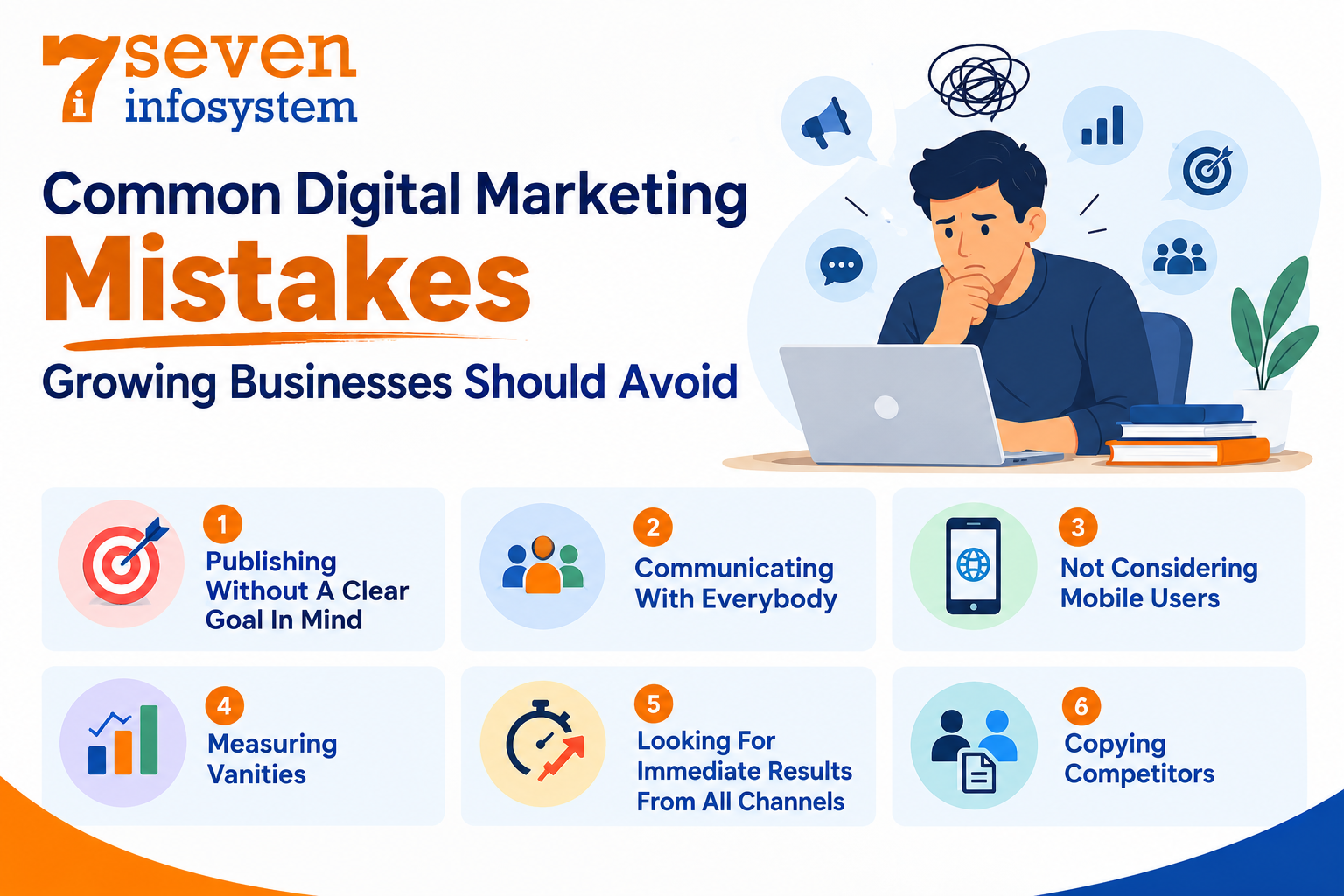
Common Digital Marketing Mistakes Growing Businesses Should Avoid
Well-intentioned marketing efforts can be counterproductive when organizations prioritize activity over strategy.
Here are some mistakes to avoid:
Publishing Without A Clear Goal In Mind
It is possible to make noise by posting something just because the calendar tells you to. It does not bring any business benefits. Each major campaign should have a goal.
Communicating With Everybody
Broad communication does not mean effective communication. The more focused the audience is, the better the communication becomes.
Not Considering Mobile Users
Mobile devices drive much web traffic. Make sure that your website, form submissions, emails, advertisements, etc., function well on them.
Measuring Vanities
Followers, likes, and impressions can be important metrics; however, they do not necessarily show business success. More meaningful metrics are leads, conversions, sales, retention rate, and cost of acquisition.
Looking For Immediate Results From All Channels
It may take some time for methods like SEO and content marketing to start working.
Copying Competitors
It is good to study competitors, but it can make it harder to develop your own style if you try to copy everything.
Conclusion
Digital marketing has become an essential tool for driving business growth among companies of virtually any size and in any industry sector. However, just joining in on all the marketing trends and using all available platforms does not ensure success.
For success, there must be in-depth knowledge of your clients, credibility-building through the Internet, content creation, enhanced visibility through search engines, effective use of social media, advertising, relationship-building with your clients, and measuring results.
The best way to do all this is by linking everything to business objectives.
Begin with the basics. Get to know your target audience. Discover the problems that you can solve. Content creation should be based on clients' needs. Navigation on your site should also be easy, with effective UI/UX design helping create a smooth, intuitive, and user-friendly experience.
As you progress, so does your digital marketing strategy.
The companies that constantly learn, develop, and put clients at the forefront of their online operations will be better positioned to build visibility and credibility and drive business growth.