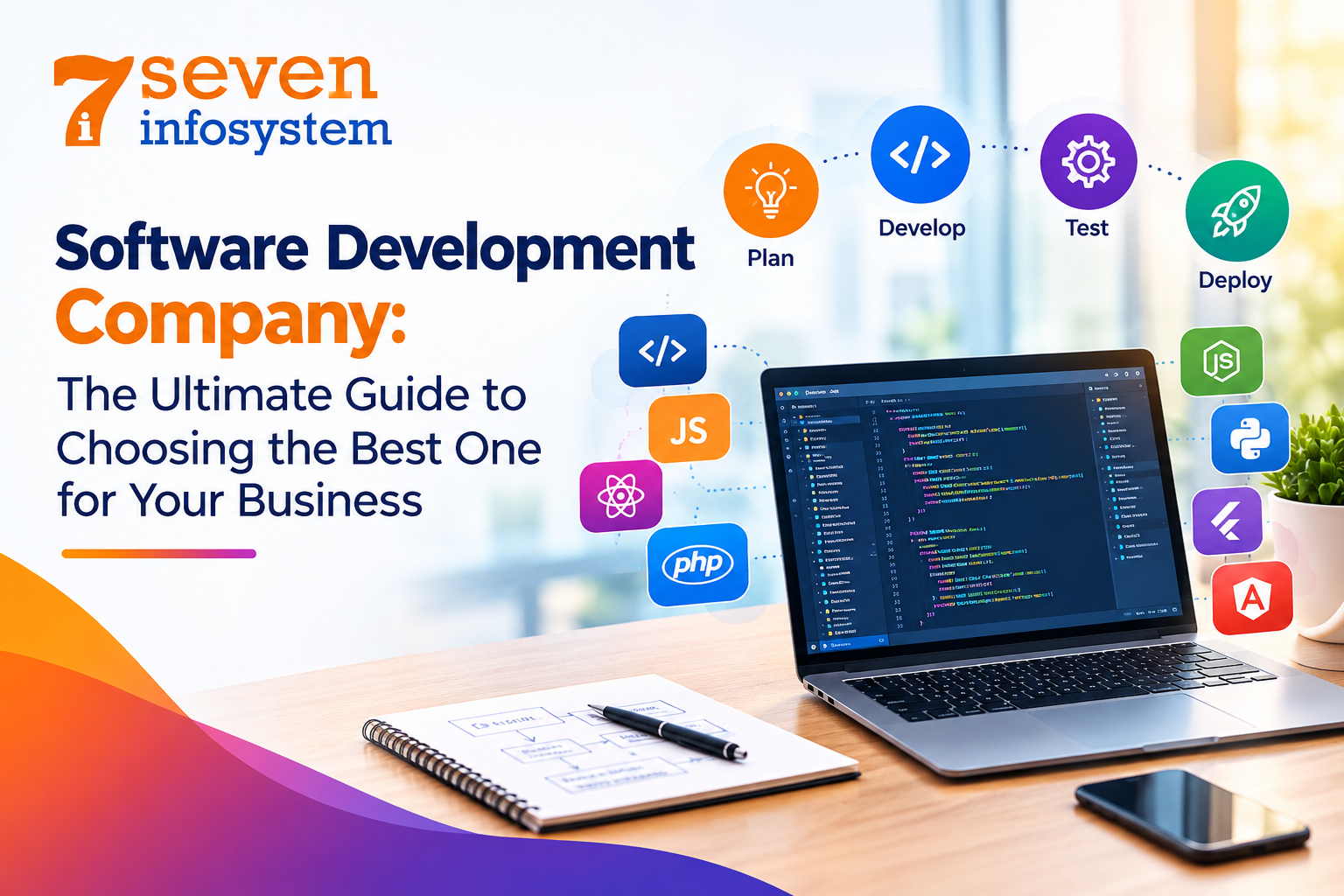
Software Development Company: The Ultimate Guide to Choosing the Best One for Your Business
Discover how to choose the right Software Development Company for your business. Compare expertise, services, pricing, security, and support to make a confident choice.
Choosing the right software development company can shape the future of your business. The right partner can turn an idea into a reliable digital product. They can improve your operations and help you serve customers better. The wrong partner can cause delays, poor-quality code, rising costs, and ongoing technical problems.
Businesses now depend on software for sales, customer support, and payments. It also supports communication, data management, and internal operations. As a result, selecting a reliable technology partner is no longer just an IT decision. It is a business decision.
Whether you need a mobile app, enterprise platform, eCommerce solution, or website, choosing the right partner is essential. A capable development team can help turn your requirements into a reliable solution. A strong partner should understand your business goals, technical requirements, budget, and long-term plans.
This guide explains how to choose the right software development company. It also covers key factors to consider before signing a contract.
Why Choosing the Right Software Development Company Matters
Software development involves more than writing code. A successful project requires careful planning, design, and development. Testing and deployment follow these stages. Maintenance and continuous improvement help ensure long-term success.
An experienced software development company can manage these stages with a clear process. The team can also identify technical risks before they become expensive problems.
The right development partner can help you:
- Build software that matches your business needs
- Reduce development risks
- Improve user experience
- Launch products faster
- Maintain better software quality
- Protect sensitive business data
- Scale your application as your business grows
- Reduce long-term maintenance costs
A reliable partner also communicates clearly. You should know what the team is building, when they will deliver it, and how much it will cost.
Define Your Business Requirements First
Before contacting a software development company, define what you want to achieve. A clear project brief helps development teams understand your expectations.
Start by identifying the problem your software should solve. Then determine who will use it and what features they need.
Identify Your Main Business Goal
Ask yourself why you need the software.
Do you want to automate manual tasks? Improve customer service? Increase online sales? Manage business data? Launch a new digital product?
Your answer will influence the technology, features, budget, and development approach.
List Your Required Features
Create a basic list of essential features. For example, an eCommerce platform may require:
- User registration
- Product search
- Shopping cart
- Online payments
- Order tracking
- Customer accounts
- Admin management
- Analytics
Separate essential features from optional features. This approach helps the development team create a realistic project plan.
Consider Your Future Requirements
Do not focus only on your current needs. Think about where your business will be in the next few years.
Your software should have enough flexibility to support future users, features, integrations, and business growth.
Decide What Type of Development Partner You Need
Not every business needs the same type of development partner. Your project requirements should determine the type of company you choose.
You may need a startup-focused development team, an enterprise technology provider, or a custom software development company.
Custom Software Development Company
A custom software development company builds solutions according to specific business requirements. This option can work well when off-the-shelf software does not provide the flexibility your business needs.
Custom software can support unique workflows, integrations, security requirements, and customer experiences.
It may also provide greater control over the product as your business grows.
General Software Development Provider
Some companies offer standard development solutions for different industries and project types. They may provide ready-made frameworks, development packages, or specialized services.
This approach can work well for businesses with straightforward requirements.
Specialized Development Team
You may also choose a team that specializes in a specific technology or industry. For example, some companies specialize in mobile applications and cloud platforms. Others focus on fintech systems, healthcare solutions, or eCommerce development.
Specialization can be useful when your project has complex technical or industry-specific requirements.
Evaluate the Company's Experience
Experience is one of the most important factors when selecting a software development company.
Do not evaluate a company only by the number of years it has been operating. Look at the type of projects it has completed and whether those projects are similar to yours.
Review the Company's Portfolio
A portfolio can show you the company's practical capabilities.
Look for projects that demonstrate:
- Similar business requirements
- Relevant technologies
- Strong user interfaces
- Complex integrations
- Scalable architecture
- Successful product launches
Ask potential partners to explain their role in each project. A company may display a project in its portfolio. However, it may not have managed the entire development process.
Check Industry Experience
Industry experience can help a development team understand common challenges and regulations.
For example, a financial application may require stronger security and compliance practices than a simple business website.
However, industry experience should not be your only selection factor. Strong technical skills, communication, and project management are equally important.
Examine the Software Development Services Offered
A full-service provider can simplify project management. Instead of working with several vendors, you can manage development through one technology partner.
Ask what software development services the company provides.
Common services include:
- Business analysis
- UI/UX design
- Web application development
- Mobile app development
- API development
- Cloud development
- Software testing
- Quality assurance
- DevOps
- Software maintenance
- Technical support
- Software modernization
A provider that covers several stages can make communication easier and reduce coordination problems.
Assess Technical Expertise
Technology choices can affect your application's performance, security, scalability, and maintenance costs.
A reliable software development company should have modern technical expertise. This includes frameworks, programming languages, databases, cloud technologies, APIs, and cybersecurity.
Ask About Their Technology Stack
Ask which technologies the team recommends for your project and why.
Do not choose a company simply because it uses popular technologies. The technology should fit your project requirements.
A professional team should explain technical decisions in simple business terms.
Check Development and Testing Practices
Ask how the team handles:
- Code reviews
- Automated testing
- Manual testing
- Security testing
- Performance testing
- Version control
- Deployment
- Bug tracking
A structured development process can improve software quality and reduce future problems.
Evaluate Communication and Collaboration
Good communication can make or break a development project.
Your development partner should provide regular updates and respond to questions promptly. The team should also explain technical issues without unnecessary jargon.
Before choosing a company, ask:
- How often will we receive project updates?
- Who will manage communication?
- Which collaboration tools do you use?
- How do you handle feedback?
- How quickly do you respond to urgent issues?
- Who makes technical decisions?
A strong service company should treat communication as part of the service, not as an afterthought.
Understand the Development Process
Every professional development team should have a defined workflow.
Ask the company to explain its process from project discovery to launch.
Discovery and Planning
The first stage should focus on understanding your business, users, goals, and technical requirements.
The team may create specifications, wireframes, project estimates, and development milestones.
Design and Development
During this stage, designers create the user experience while developers build the software.
A collaborative approach can help ensure that the final product is attractive, functional, and easy to use.
Testing and Quality Assurance
Testing should happen throughout development rather than only before launch.
The team should identify bugs, usability issues, security risks, and performance problems before users encounter them.
Deployment and Maintenance
Launching the software is not the end of the project.
Ask whether the company provides maintenance and technical support after deployment. Regular updates can keep your software secure, stable, and compatible with changing technologies.
Compare Pricing and Overall Value
Cost matters, but the cheapest option is not always the best choice.
A low initial quote may exclude testing, maintenance, security, support, or important features. These additional expenses can increase the final cost.
Instead of comparing only hourly rates, compare the overall value.
Consider:
- Project scope
- Development quality
- Team experience
- Communication
- Security practices
- Testing process
- Maintenance
- Support
- Delivery timeline
Ask each software development company for a detailed proposal. The proposal should explain what is included in the price and what may create additional costs.
Ask for a Clear Project Timeline
A realistic timeline helps both sides manage expectations.
Ask the company to divide the project into milestones. Each milestone should have clear deliverables.
For example:
- Requirement analysis
- Project planning
- UI/UX design
- Development
- Testing
- User acceptance testing
- Deployment
- Post-launch support
Be careful with companies that promise extremely fast delivery without understanding your requirements.
Speed should never come at the expense of quality.
Check Client Reviews and References
Client feedback can provide valuable insight into a company's working style.
Look for reviews that mention:
- Communication
- Product quality
- Project management
- Technical expertise
- Reliability
- Meeting deadlines
- Post-launch support
You can also ask the company for client references.
Speaking directly with previous clients can help you understand what it is actually like to work with the development team.
Review Security Practices
Security should be a priority for every digital project.
Your software may store customer details, payment information, and employee data. It may also contain business records and other sensitive information.
Ask the software development company how it protects applications and infrastructure.
Important areas include:
- Secure coding
- Access control
- Data encryption
- Authentication
- Authorization
- Vulnerability testing
- Backup procedures
- Secure deployment
- Security updates
A company that takes security seriously should be able to explain its practices clearly.
Consider Website Development Capabilities
If your business also needs a website, check whether the development partner provides website development services.
A professional website should do more than look attractive. It should load quickly and work seamlessly across devices. The solution should also deliver a great user experience and meet your business objectives.
Ask about:
- Responsive design
- Content management systems
- Search engine optimization
- Website security
- Page speed
- Analytics integration
- Third-party integrations
- Website maintenance
Choosing one technology partner for both software and website development can simplify long-term management.
Check Scalability and Long-Term Support
Your software should support business growth.
Ask how the company designs applications for scalability. A scalable solution can support more users, transactions, data, and features. It can do so without requiring a complete rebuild.
Also discuss long-term support.
Ask whether the company provides:
- Bug fixes
- Performance optimization
- Security updates
- Feature improvements
- Infrastructure support
- Technology upgrades
Long-term support can protect your investment after the initial launch.
Pay Attention to Intellectual Property Ownership
Before signing a contract, clarify who owns the final software and source code.
The agreement should clearly address:
- Source code ownership
- Design ownership
- Documentation
- Third-party software licenses
- Intellectual property rights
- Data ownership
Do not assume that paying for development automatically gives you complete ownership of every project component.
Get the terms in writing.
Review the Contract Carefully
A development agreement should clearly define responsibilities and expectations.
Check whether the contract covers:
- Project scope
- Deliverables
- Timeline
- Payment schedule
- Change requests
- Testing and acceptance
- Intellectual property
- Confidentiality
- Support
- Maintenance
- Termination terms
A detailed contract protects both your business and the development partner.
Watch for Common Red Flags
Knowing what to avoid can make your selection process easier.
Unrealistic Promises
Be cautious if a company promises exceptional results without understanding your requirements.
Professional teams usually ask detailed questions before providing a final estimate.
Poor Communication
Delayed responses, unclear answers, and inconsistent updates can become bigger problems during development.
Extremely Low Pricing
A low price can look attractive, but it may indicate limited experience, poor development practices, or hidden costs.
No Clear Process
A company should be able to explain how it handles planning, development, testing, deployment, and support.
No Post-Launch Support
Software requires maintenance. A company that disappears after launch may leave your business with expensive technical problems.
Ask the Right Questions Before Hiring
Before signing an agreement with a software development company, ask practical questions.
Business and Project Questions
- Have you developed similar solutions?
- How will you understand our business requirements?
- What development approach do you recommend?
- How will you measure project success?
Technical Questions
- Which technology stack will you use?
- How will you build for scalability?
- How do you manage security?
- What testing methods do you use?
- How will you handle integrations?
Team Questions
- Who will work on our project?
- Will we have a dedicated project manager?
- Where is the development team located?
- How will we communicate with developers and designers?
Support Questions
- What happens after launch?
- Do you provide maintenance?
- How do you handle bugs?
- How are future feature requests priced?
Clear answers can help you identify a dependable technology partner.
Choose a Partner, Not Just a Vendor
The best software development company should act as a partner.
A vendor may simply complete the assigned tasks. By contrast, a strategic development partner understands your business goals. They recommend better solutions when needed.
For example, your development partner may simplify workflows. They might recommend useful integrations, improve the user experience, or suggest a more scalable architecture..
This type of collaboration can create greater long-term value.
Focus on Business Outcomes
Avoid choosing a company based only on technical features.
The real question is: what business result will the software create?
Your goals might include:
- Increasing revenue
- Reducing operating costs
- Improving customer satisfaction
- Automating repetitive work
- Increasing employee productivity
- Entering a new market
- Improving data visibility
A good development partner should connect technical decisions with these business outcomes.
Conclusion
Choosing the right software development company requires careful research. You should look beyond pricing and marketing claims. Focus on experience and technical expertise. Consider communication, security, and development processes. Scalability and long-term support are also important factors.
If you need a highly tailored solution, a custom software development company may be the right choice. This option can better align with your specific business requirements. If your requirements are simpler, a specialized provider may be sufficient. They can offer focused software development services.
You should also consider whether the company supports related requirements. These services may include website development and maintenance. They can also cover cloud services, testing, and ongoing technical support.
Most importantly, choose a partner that understands your business goals. The right team will not simply build software. It will help you create a solution that supports growth. The solution can improve efficiency and deliver value to your customers.
Take time to compare your options, ask detailed questions, review proposals, and verify past work. A thoughtful selection process can help you find a reliable technology partner. This can turn your software investment into a long-term business advantage.