
7 Signs Your Business Has Outgrown Spreadsheets
Spreadsheets are brilliant until they quietly become your most fragile business system. Here are the seven signals that it is time to move, and what to do first.
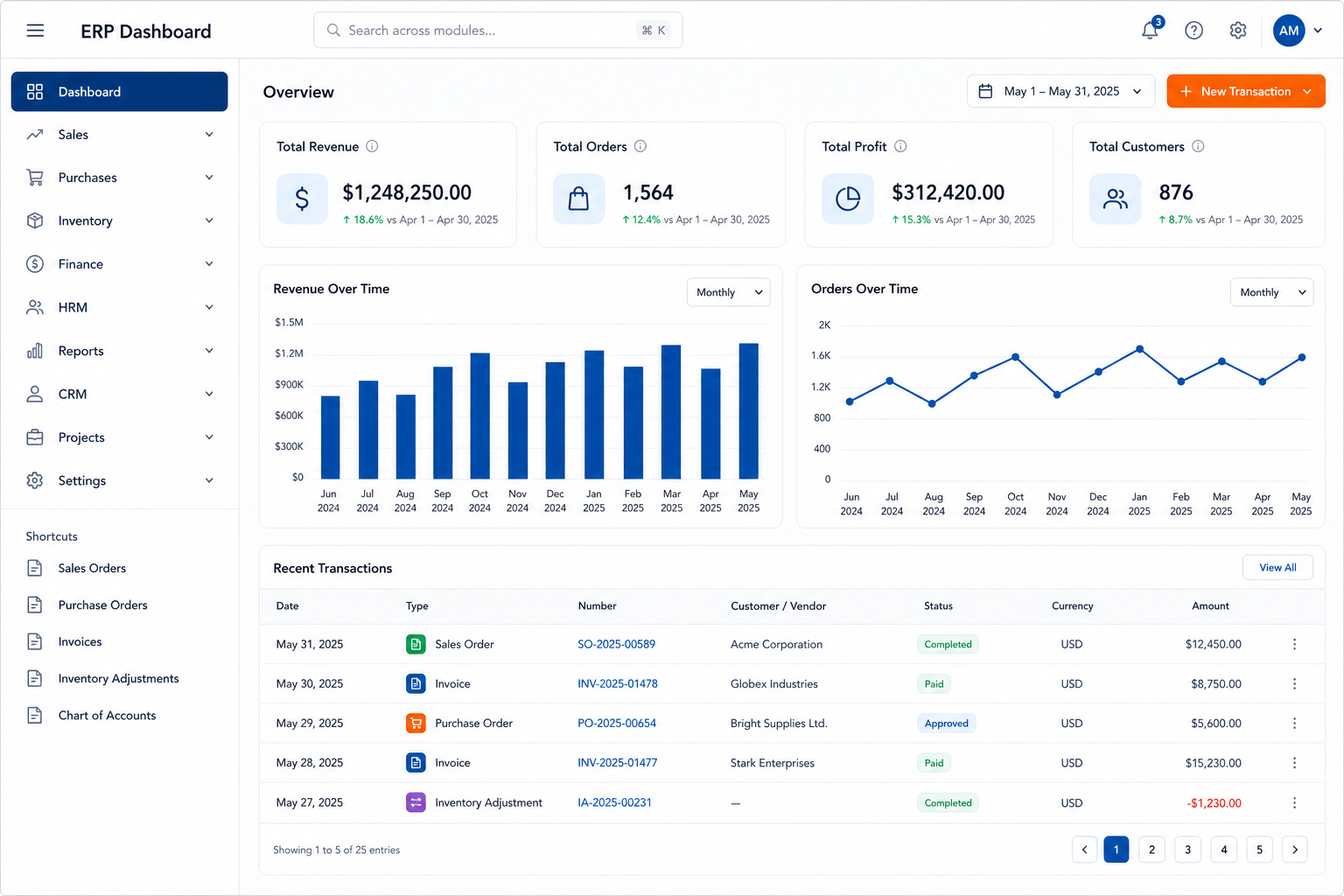
We are not anti-spreadsheet. Excel and Google Sheets are among the most useful tools ever built for business, and almost every company we work with should keep using them for modelling, analysis and one-off exercises. The problem starts when a spreadsheet stops being an analysis tool and quietly becomes a production system that the business depends on.
1. One person is the single point of failure
There is a file only one person fully understands, and when they are on leave, something important stops. That is not a spreadsheet problem, it is a business continuity risk with a .xlsx extension. Systems should encode process; individuals should not have to.
2. Nobody trusts the numbers without checking them
When a figure is questioned, does someone open the file and verify it manually? If two departments produce different totals for the same month and the meeting becomes a reconciliation exercise, you no longer have a single source of truth — you have several competing ones.
3. The same data is entered more than once
An order is typed into a sheet, again into the accounting package, again into a courier portal, and once more into a stock file. Each re-entry is a chance to introduce an error, and every error takes ten times longer to find than it took to create.
4. Month-end takes days instead of hours
If closing the month means consolidating files from four departments, chasing missing entries and correcting formulas, you are paying a recurring tax in your most expensive people's time. Worse, decisions during that period are being made on numbers nobody quite believes.
5. You cannot answer basic questions quickly
Which customers have not ordered in 90 days? What is our true margin on this product line after rejections? Which stock has been sitting for over a year? If answering any of these requires a half-day of manual work, you are effectively flying without instruments.
6. There is no history and no accountability
A number changed. Who changed it, when, and why? Spreadsheets rarely answer that. As soon as you have staff turnover, statutory audits or a customer dispute, that missing audit trail becomes expensive.
7. Growth makes things worse rather than better
The clearest signal of all. If adding a location, a product line or five people means more manual coordination rather than more output, your operating system is capping your growth. Good software makes the tenth branch easier than the third.
What to do about it
Do not attempt to replace everything at once. Pick the single process causing the most pain — usually stock or order-to-invoice — and move that one first. Choose a system that can absorb neighbouring processes later, migrate your historical data properly with reconciliation, and keep the spreadsheet running in parallel until the numbers match for a full cycle.
And keep using spreadsheets afterwards, for what they are genuinely good at: exploring a question nobody has asked before. Just stop asking them to run the company.
If two or three of these signs feel familiar, a short process review will tell you which one to tackle first. That conversation costs nothing and usually clarifies more than a product demo would.