10 Best UI/UX Design Services for Creating Stunning Digital Customer Experiences
Discover 10 best UI/UX design services that create stunning digital customer experiences, improve usability, boost engagement, and drive conversions.
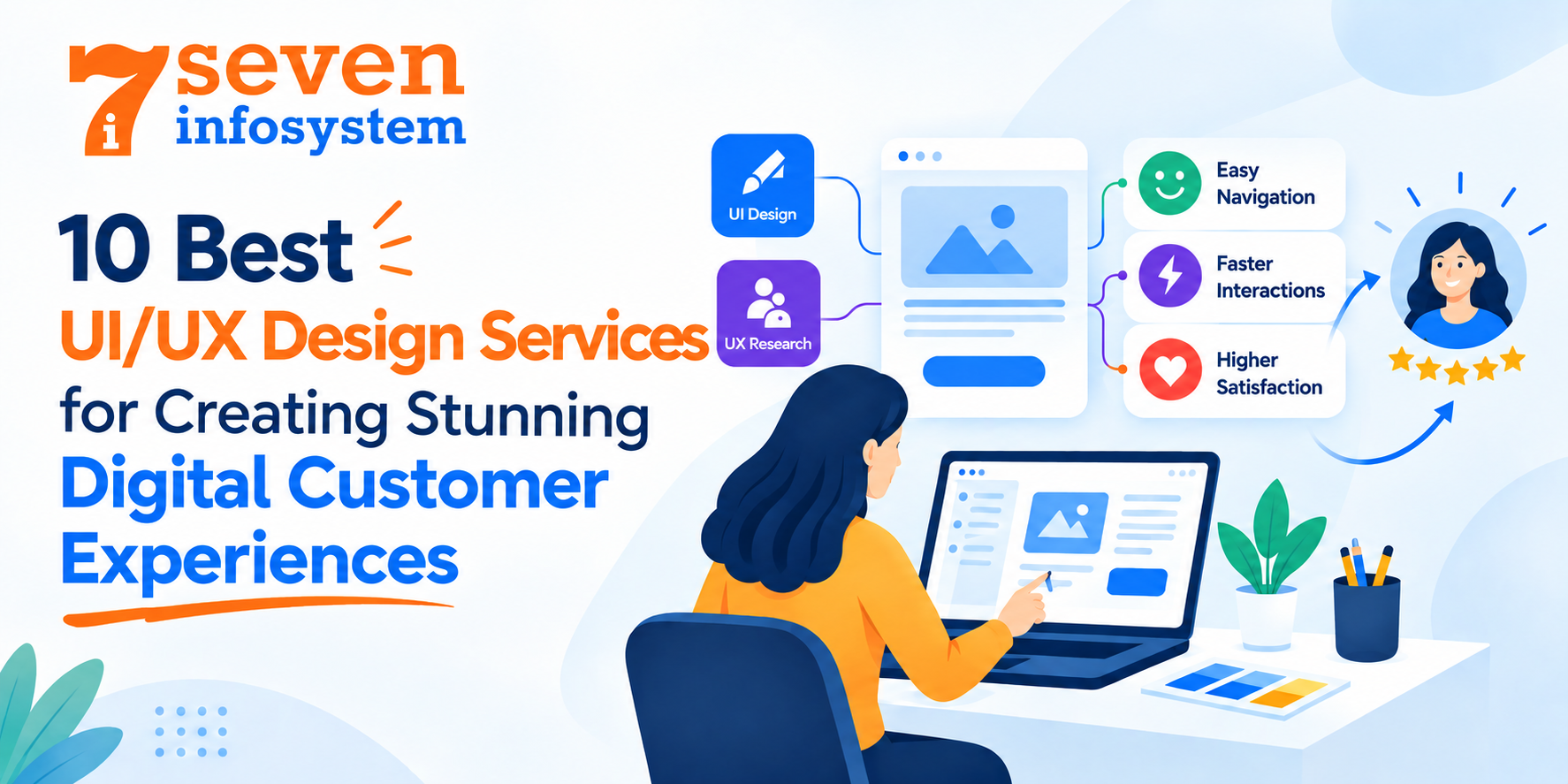
Today’s technology-driven society forms judgments about any company through first impressions created during interactions with their websites, mobile apps, and digital platforms. An appealing interface might be impressive at first glance, but user-friendly interaction with the site is what keeps customers engaged and active. UI/UX Design Services have to do with this phenomenon.
The term UI stands for User Interface design and concerns the appearance and interactivity of a digital product. UX design, which stands for User Experience design, deals with customers’ emotions when using the product and the simplicity of accomplishing tasks in the process. When both areas cooperate with each other, companies can offer their customers attractive, easy-to-use, customer-oriented experiences.
It can improve navigation, boost mobile usability, decrease frustration, increase engagement, and promote conversion, among other things.
This paper will discuss how UI/UX Design Services contribute to better digital customer experiences and why user-centered design has become an integral part of the modern digital world.
UI/UX Design Services: Creating Digital Experiences Around Real Customer Needs
For digital products to succeed, companies must first understand their users. Visual appeal alone does not create a useful product. Companies need to know what customers want, how they behave, where they struggle, and what goals they have.
Professional design teams use several methods to understand these needs. These methods include user research, customer journey mapping, surveys, interviews, usability testing, and competitor analysis.
This research helps companies answer important questions:
- What do customers want to achieve?
- Where do users face problems?
- What information do they need first?
- What stops them from taking action?
- Which features would help them most?
With these insights, companies can avoid guesswork. They can build products that solve real problems and meet customer needs.
Making Website Navigation Simple and Intuitive
Inadequate navigation will soon irritate users. When users are unable to access products or services, find contact information, pricing data, or any other relevant information, they will abandon your website.
UI/UX Design Services help design a proper information architecture and navigation systems. Designers organize information and provide menus, buttons, filters, search, and navigation in such a way that it makes navigation easy.
A proper navigation system will enable users to navigate through a website without having any confusion about where they have to go next.
Effective navigation can lead to:
- Faster access to information
- Reduced user irritation
- Increased engagement on the website
- Improved accessibility
- Increased conversion rates
A digital experience should be intuitive rather than making users learn how to use an interface.
Improving Website and Application Usability
Improving website and application usability is essential for creating digital experiences that are simple, intuitive, and enjoyable for users. As a result, a well-designed website or mobile application helps visitors find information quickly, complete tasks effortlessly, and interact with digital products without confusion. For businesses, this improved usability can lead to higher engagement, increased conversions, and stronger customer satisfaction.
First of all, simple and intuitive navigation plays an important role in usability. Users should be able to move through a website or application naturally with clear menus, recognizable icons, and well-organized content. Therefore, a logical navigation structure reduces frustration and helps visitors reach important pages with fewer clicks. In addition, clear navigation allows users to understand the website structure quickly and encourages them to explore more pages.
Furthermore, responsive web design is another key factor in improving usability. Since users access websites and applications from smartphones, tablets, laptops, and desktops, the interface should adapt seamlessly to different screen sizes. Moreover, fast-loading pages, readable typography, accessible buttons, and touch-friendly elements can significantly improve the mobile user experience. As a result, users can interact with the website comfortably across different devices.
Equally important, effective UI/UX design focuses on consistency. Using consistent colors, fonts, layouts, buttons, and interaction patterns allows users to understand how a digital product works without learning new behaviors on every page. Additionally, clear calls-to-action (CTAs) can guide users toward important actions such as making a purchase, submitting a form, or contacting a business.
Ultimately, better website and application usability creates smoother user journeys, reduces confusion, and helps businesses deliver a more satisfying digital experience.
Designing Consistent Brand Experiences
Consumers interact with brands through various digital channels such as visiting websites, accessing mobile apps, communicating via social media channels, and receiving emails and notifications.
It is essential to design for consistency to enable consumers to identify the brand and understand the capabilities of its digital products.
UI/UX Design Services are able to design systems that consist of:
- Brand colors
- Typography
- Buttons
- Icons
- Spacings
- Form fields
- Navigation patterns
- Visual components
- Interaction styles
Consistency leads to familiarity. Once consumers learn how one part of a digital product function, they are likely to know how other parts function.
Having a consistent interface allows the business to be perceived as more credible.
Enhancing Mobile Customer Experiences
It is evident that mobile devices have already become a fundamental part of people’s digital experience. Websites and applications have to be mobile-friendly.
Mobile users expect fast, simple, and seamless digital experiences. A well-designed mobile interface helps customers find information quickly, complete tasks easily, and interact with a brand without frustration.
With effective UI/UX design services, businesses can create mobile experiences that fit real customer needs. Designers focus on clear navigation, responsive layouts, readable content, simple forms, and easy-to-use buttons. These elements help users move smoothly through apps and mobile websites.
A strong mobile experience can also improve customer engagement, conversions, satisfaction, and loyalty. Fast loading times and intuitive navigation reduce friction and encourage users to stay longer.
Businesses that prioritize mobile UX can build stronger connections with their customers. By combining user research, responsive design, and continuous usability testing, companies can deliver mobile experiences that feel natural, efficient, and valuable.
UI/UX Design Services offers responsive and mobile-first designs which fit various screen sizes.
Important points are:
- Buttons which are easy to tap
- Readable typography
- Easy navigation
- Right spacing
- Mobile-friendly forms
- Quick-loading pages
- Calls to action
A mobile-friendly experience can be beneficial for businesses to serve their clients on any device.
Reducing Customer Friction at Important Touchpoints
Customer friction is everything that complicates a digital experience for no reason. Friction happens at registration, searching for products, payment, booking, download, and customer service.
Any minor obstacle influences customer behaviour. Complex checkout forms, ambiguous errors, and unclear buttons may make people stop doing something that is supposed to be done.
UX designers spot those friction points by studying the users and testing the process. Then, they make the journey easier and more streamlined by cutting out unnecessary choices, clarifying instructions, and explaining crucial information.
Customer friction can make users abandon a website or application before completing their goals. Businesses can improve customer experience and UX design by identifying confusing steps and making important touchpoints easier.
From website navigation and product searches to checkout and customer support, every interaction should feel simple and intuitive. Clear calls-to-action, faster loading times, easy forms, mobile-friendly layouts, and helpful error messages can reduce frustration and keep customers engaged.
By removing unnecessary steps and improving usability at key touchpoints, businesses can create smoother customer journeys, higher conversions, and stronger customer loyalty.
It’s not about adding new features to the design. It’s about removing obstacles to customers’ goals.
Building Trust Through Professional Interface Design
Trust plays a major role in the digital interaction process. The client may be unwilling to buy a product, provide information about themselves or pay via the website if it looks unprofessional or suspicious to them.
Professional branding also strengthens digital credibility. Businesses can use consistent colors, fonts, icons, buttons, and visual elements across their digital platforms. This consistency helps customers recognize the brand and understand how its products work. It also creates a more reliable and professional brand image.
The visual cues that can add to the level of trust are as follows:
- Professional branding
- Professional typography
- Layout consistency
- Transparent information
- Pricing information
- Interface patterns
- Payment security cues
- Error messages
- Contact information
Good design cannot substitute for the quality and safety of the website itself. However, it can show professionalism and help build clients’ confidence in the digital interaction process.
Making Customer Journeys More Efficient
A customer journey includes the various stages a customer goes through while interacting with a business.
For example, an online customer journey may follow these stages:
Discover → Explore → Compare → Choose → Purchase → Get Help → Return
UI/UX Design helps businesses analyze each stage and identify ways to improve the overall experience. By examining where customers lose interest, feel confused, or need more information, businesses can design the journey so customers move smoothly from one stage to the next.
An efficient customer journey helps users move smoothly from discovering a brand to making a purchase and receiving support. Businesses can improve this experience by simplifying navigation, removing unnecessary steps, and providing clear information.
A strong UX makes every interaction simple, fast, and convenient. Personalization, mobile-friendly design, easy checkout processes, and accessible customer support can reduce friction and increase customer satisfaction.
In this way, businesses can make it easier for customers to accomplish their intended tasks.
Improving Conversion Rates Through Better Design
Design can have a direct impact on conversions. This would include purchase, booking, sign-up, contact form submission, subscription, download of an application, etc.
It is important for users to know how to perform certain actions and why they need to do so.
There are elements for optimization by UI/UX designers, and these would include:
- Call-to-action buttons
- Product page
- Landing page
- Contact forms
- Checkout page
- Price page
- Booking process
- Lead-generation form
In other words, if there is a complicated form with multiple steps, then a designer could eliminate all of this and make it less complicated.
The point here is not to force customers into performing some actions but to eliminate barriers.
Personalizing the Digital Experience
In the current environment, customers are expecting more from digital platforms in terms of understanding their preferences.
Personalization examples are product recommendations, previously viewed products, location-based information, preference settings, personalized dashboards, and relevant content.
UX designers can be useful in determining instances where personalization is necessary but does not complicate the user interface.
A personalized experience can enable customers to feel more relevant on digital platforms.
The Future of Digital Customer Experience Depends on Better UX
The future of digital customer experience (CX) is closely connected to the quality of user experience (UX). As customers increasingly interact with businesses through websites, mobile applications, e-commerce platforms, and digital services, expectations for fast, simple, and personalized experiences continue to grow. Businesses that prioritize better UX can create stronger customer relationships while improving engagement, conversions, and long-term loyalty.
Modern users do not want to spend time figuring out how a website or application works. They expect intuitive navigation, fast performance, clear information, and seamless interactions. A well-planned UX design removes unnecessary steps and helps customers complete their goals with minimal effort. Whether someone is searching for a product, filling out a form, making a payment, or contacting support, every interaction contributes to their overall digital customer experience.
- Personalization Will Shape Future Customer Experiences
- Mobile-First and Accessible UX
- AI and Smarter Digital Interactions
Why Better UX Matters for Businesses
Investing in better UX can provide measurable business benefits, including improved customer satisfaction, higher conversion rates, stronger retention, and reduced customer support demands. Regular UX research, usability testing, customer feedback, and performance analysis allow businesses to continuously improve their digital products.
Ultimately, the future of digital customer experience depends on putting users at the center of every decision. Better UX is not simply about attractive interfaces—it is about creating digital experiences that are useful, accessible, efficient, and memorable. Businesses that continuously improve UX will be better positioned to meet changing customer expectations and build lasting digital relationships.
Conclusion
UI/UX Design Services provide the best customer experience in the online world through designing and making websites, applications, and other mobile-friendly digital platforms, easy to navigate, fast, and engaging. The User Experience is critical at every step of the customer experience process, from making navigation easy and designing in a responsive manner to accessibility and conversions.
The customer experience that can be provided to customers has many benefits for businesses in terms of reduced frustrations, increased trust, engagement, conversions, and customer loyalty.
Good digital products are not always about having a lot of functionalities. The best products are the ones that enable customers to achieve what they want without wasting extra effort.
For companies that want to stay ahead of the curve in a world that is becoming increasingly digital, UI and UX design services are not merely an improvement in looks. They are an investment in customer happiness, company credibility, growth, and success in the digital world.
Frequently Asked Questions
1. What are UI/UX Design Services?
UI/UX Design Services create attractive, user-friendly, and intuitive websites and applications that provide smooth digital experiences.
2. How do UI/UX Design Services improve customer experience?
They simplify navigation, reduce user frustration, and make digital interactions faster, easier, and more enjoyable.
3. Why is UX design important for a business website?
UX design helps visitors find information quickly and complete actions easily, improving engagement and conversions.
4. What is the difference between UI and UX design?
UI focuses on the visual appearance of a product, while UX focuses on usability, functionality, and the overall user journey.
5. Can UI/UX Design Services increase conversion rates?
Yes, better layouts, clear CTAs, and simpler user journeys can encourage more visitors to complete desired actions.
6. Are UI/UX Design Services important for mobile applications?
Yes, they help create responsive, touch-friendly, and easy-to-use mobile experiences across different devices.