7 Key Factors to Consider Before Hiring a Web Development Company
Discover 7 key factors to consider before hiring a Web Development Company for a successful, reliable, and scalable website.

Introduction
Choosing the Web Development Company is one of the important decisions a business can make when building or improving its online presence. A website is no longer an online brochure. A website can be a sales channel, a customer-support platform, a lead-generation tool, an e-commerce store and a central part of brand identity.
However not every web development partner offers the level of expertise, technology, communication or support. Selecting a company only because it offers the price can result in poor performance, security problems, delays or expensive redevelopment later.
Whether you are a startup or a small business or a growing company or an established enterprise it's important to check out a development partner before you sign a contract.
If you are specifically looking for a web development company in Rajkot the same principles apply. You should evaluate experience, portfolio, technical capabilities, pricing, communication, security, SEO and long-term support before making your decision.
What Is a Web Development Company?
A Web Development Company helps businesses and organizations create, launch, and manage websites and web-based applications. Its team plans, builds, tests, launches, and maintains digital solutions to ensure they work smoothly and meet business goals.
Web development covers both the parts of a website that users see and the technology that powers the website in the background. Depending on the project requirements, a Web Development Company may provide services such as website design, front-end development, back-end development, database development, API integration, e-commerce solutions, CMS development, ongoing maintenance, security enhancements, and performance optimization.
Moreover, modern web development goes beyond building a basic website. Today, businesses also use content management systems, e-commerce platforms, cloud-based applications, third-party integrations, analytics tools, and automation features. A Web Development Company can also help businesses improve search engine optimization (SEO), strengthen cybersecurity, and enhance website performance.
For example, businesses can work with a Web Development Company to create a scalable website that supports changing customer needs. In addition, ongoing maintenance and security updates help keep the website reliable, secure, and up to date.
Advantages of Working With a Web Development Company
Hiring a professional development company can provide several advantages:
- Access to experienced developers and specialists
- Professional and scalable website development
- Better security and performance
- Responsive websites for different devices
- Integration with third-party tools and business systems
For companies with complex requirements, working with a business web development company can be particularly useful because the development process can be aligned with business objectives rather than focusing only on visual design.
Check the Web Development Company’s Experience and Expertise
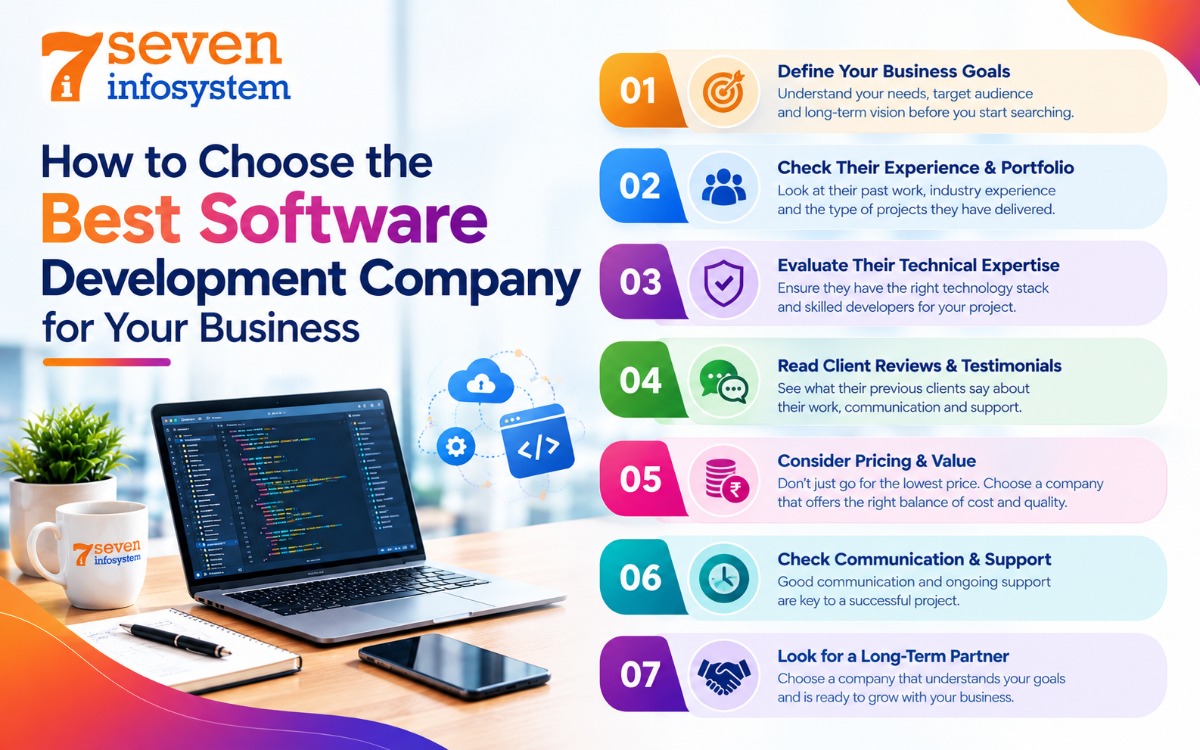
Experience is often the thing you look at when picking a Web Development Company. A company that has experience will usually know the typical problems that happen in development and can give you solid solutions.. Do not judge experience only by how many years the company has been around. Instead look at the kinds of projects the company has finished and see if those projects match what you need.
Review Their Industry Experience
Industry experience can help developers understand the expectations of your customers and the functionality your website needs.
For example an e-commerce business may need product management, payment gateways order tracking, inventory integration and customer accounts. A service-based company may need lead-generation forms, appointment booking, CRM integration and location-based features.
Having developers who have worked in your industry can make a big difference. They already know what users expect, what features matter most and what common challenges come up. This experience saves time. Helps avoid mistakes. It also leads to an user experience because the developer has seen similar websites before and knows what works and what doesn’t.
Evaluate Their Technical Expertise
Technology plays an important role in website performance. It affects website speed, security, scalability, and maintenance.
Before hiring a Web Development Company, ask about its technology stack. Find out which programming languages the developers use. Also, ask about their preferred frameworks and databases.
Make sure their technical skills match your current needs. Their expertise should also support your future business goals. A skilled development partner can build a website that grows with your business.
Furthermore, good developers should explain technical decisions clearly. They should avoid unnecessary technical jargon. Instead, they should use simple language that makes sense for your business.
Look for Relevant Website Development Experience
Having work on similar website types can lower the risks that come with development. Check if the company has built websites, online stores, portals, SaaS platforms, web applications or other solutions that look like yours.
If you are looking at a Rajkot web development company, compare the providers by looking at their real expertise and the projects they have finished. Do not pick a company just because it works in the city.
Review Their Portfolio and Previous Web Development Projects
A company’s portfolio gives you practical evidence of what it can deliver. Before hiring a Web Development Company, carefully review its previous projects. A portfolio should demonstrate more than attractive visuals. Look for evidence of functionality, usability, responsiveness, performance, and technical quality.
What to Look for in a Web Development Portfolio
Check whether the portfolio contains projects similar to your business or technical requirements.
Pay attention to:
- Website structure
- User experience
- Mobile responsiveness
- Page speed
- Visual consistency
A diverse portfolio can demonstrate versatility, while relevant projects can show that the company understands your specific needs.
Check the Quality and Functionality of Previous Websites
Whenever possible, visit the websites listed in the portfolio yourself. Test them on both desktop and mobile devices.
Check whether pages load properly, forms work, navigation is easy, and important information is accessible.
A website may look excellent in a screenshot but provide a poor user experience in real-world use. Testing live projects gives you a better understanding of the company’s development standards.
Read Client Reviews and Testimonials
Client feedback can give clues about how well people talk, how reliable a provider is, how projects are handled, how deadlines are met, how technical help works and how happy the overall experience is.
Do not focus only on star ratings.
Read the words that people write and look for patterns that show up again and again. If many clients say that communication is strong and that delivery is, on time that is a sign.
On the other hand if many people complain about delays or missing support that is a warning sign.
Evaluate Their Web Development Technologies and Services
The right technology depends on your website’s requirements. A professional Web Development Company should recommend technologies based on functionality, scalability, security, and maintenance needs.
Front-End and Back-End Development
Ask if the company has experience in both end and back-end development. Front-end development is responsible for the part of the website that users see and interact with.
Back-end development deals with the server-side operations and how data is managed For more complex projects choosing a full-stack web development company can make things easier.
The same team can work on both the end and back-end which helps keep communication clear and smooth.
CMS and E-Commerce Development
If you need to update your website a content management system can be the right solution. If you plan to sell products your website will likely need e-commerce features.
It is important to ask about experience with CMS platforms, shopping carts, payment gateways, product management, customer accounts, shipping integrations and other essential features. Select a platform that matches your business needs, not one that is trending.
Mobile-Friendly and Responsive Web Development
A large portion of website traffic comes from smartphones and tablets. Therefore your website should offer an experience, across all screen sizes. Responsive development lets layouts and content adjust to desktop, tablet and mobile devices.
Before hiring a company ask how it handles development and mobile usability.
Consider Their Pricing and Web Development Costs
Price is naturally an important consideration, but the cheapest proposal is not necessarily the best choice.
Website development costs depend on factors such as website size, functionality, design requirements, technology, integrations, content, security requirements, and ongoing maintenance.
What Factors Affect Website Development Costs?
A simple informational website will usually require fewer resources than a customized e-commerce platform or complex web application.
Cost can increase when your project requires:
- Custom UI/UX design
- Advanced functionality
- Payment integration
- CRM or ERP integration
- Third-party integrations
Compare Pricing Without Sacrificing Quality
When comparing companies make sure you are comparing similar deliverables.
One company may quote a price because the company leaves out hosting, maintenance, content migration, testing, SEO implementation or post-launch support.
Of asking only "How much does a website cost?" ask, "What exactly is included in the development package?" This approach gives a more meaningful comparison.
Watch for Hidden Development Costs
Before signing an agreement, clarify potential additional costs.
Ask about:
- Extra development hours
- Third-party software
- Hosting
- Domain-related services
- Technical support
- Content updates
A transparent pricing structure helps prevent unexpected expenses later.
Check Communication, Project Management, and Support
Even a Web Development Company that has a lot of experience can have a time making a project successful if communication is not good.
Your development partner needs to have a way to get what you need, share what is happening, deal with what you say, test what is being made and get approval for important steps.
Why Clear Communication Matters
Website development works best when people work together. You will have to tell them what your business needs, give opinions, approve what is designed and make choices while things are being built. Ask how often you will get news about the work and who the main person is that you will talk to.
Clear communication makes it less likely that there are mistakes, in what people understand and helps make sure the project matches what you want.
Understand the Project Timeline and Development Process
Ask the company to explain its development process from beginning to end.
A typical process may include:
- Requirement gathering
- Research and planning
- UI/UX design
- Testing
- SEO and performance checks
- Maintenance and support
The timeline should be realistic and based on the actual scope of work.
Ask About Website Maintenance and Technical Support
Launching your website is not the end of the process. Websites need updates, security monitoring, backups, bug fixes, performance improvements and sometimes feature enhancements.
Ask whether the company offers post launch maintenance and how support requests are handled.
Make Sure the Company Understands Your Business Goals
A successful website should solve business problems and support objectives. The right development partner should take time to understand your business than immediately discussing technical features.
Discuss Your Website’s Goals and Target Audience
Before development begins, explain what you want the website to accomplish.
Your objectives might include:
- Generating leads
- Increasing online sales
- Building brand awareness
- Increasing bookings
- Automating business processes
You should also explain who your target customers are and what actions you want them to take on the website.
Ask About Custom Web Development Solutions
Not every business needs a website. A custom solution can be useful if standard templates or plugins do not fit your needs. Ask the company how it decides if a custom feature is required and whether that feature will fit with the business's systems.
Look for a Long-Term Development Partner
Ideally the relationship with a Web Development Company should last after the launch. The business may need features, integrations, security upgrades, redesigns or better performance later on. Choose a provider that shows interest in the business's long‑term growth.
Verify Security, SEO, Performance, and Scalability
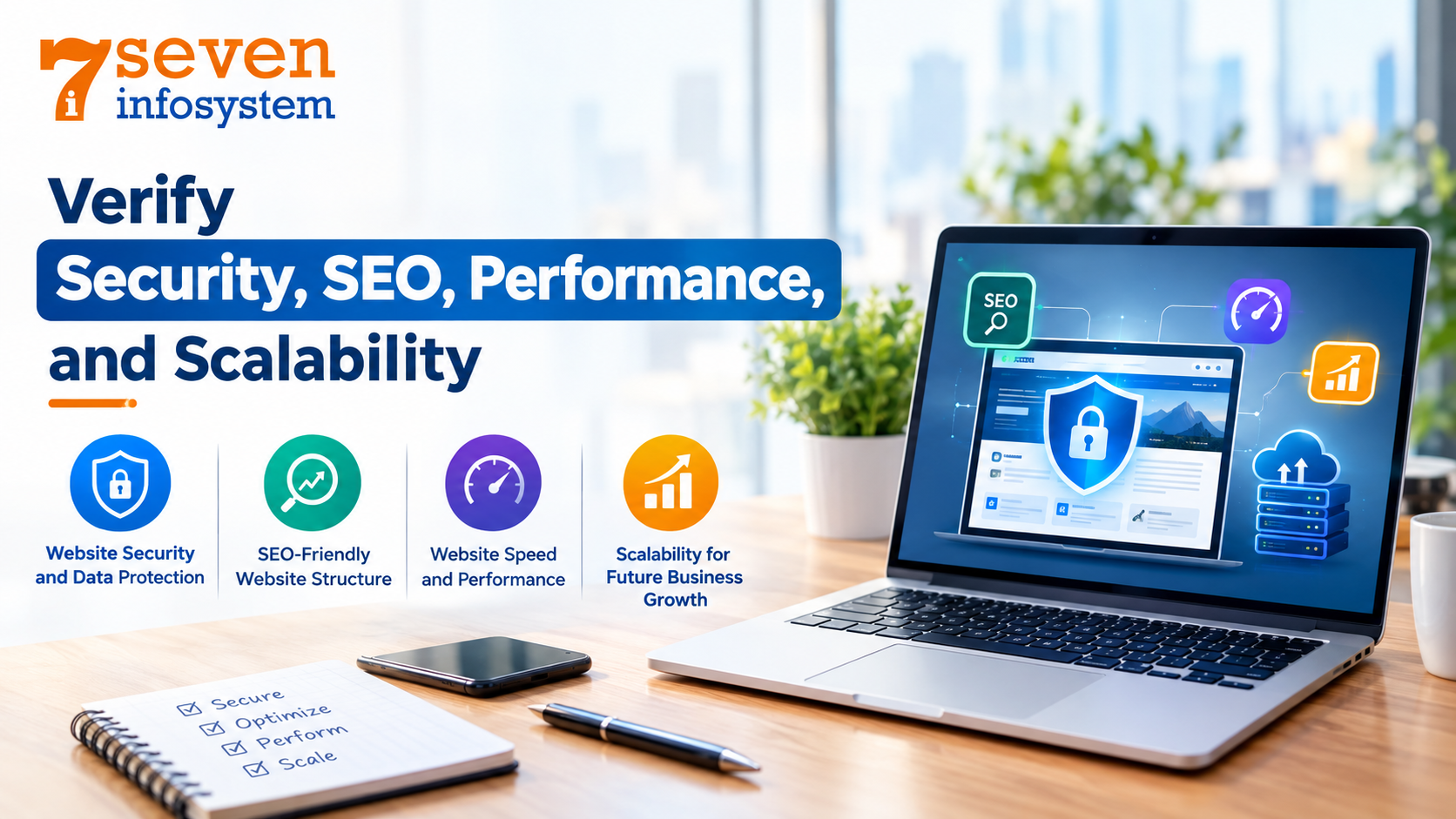
A modern website needs to be secure, fast, search-engine friendly, and capable of handling future growth.
These technical factors should be discussed before development begins.
Website Security and Data Protection
I believe that security should be planned from the start of the project.
Ask the developer about SSL/HTTPS, secure authentication, access controls, software updates, backups, vulnerability management and the safe handling of customer data.
The exact Security requirements will depend on the website and the type of information it processes.
SEO-Friendly Website Structure
I feel that an SEO-friendly structure makes it easier for search engines to crawl and understand your content.
Your developer should consider heading hierarchy, clean URLs, mobile responsiveness, internal linking opportunities, technical accessibility, structured data where appropriate and page performance.
Website Speed and Performance
I know that slow websites can create a user experience and may negatively affect business results.
Ask developers how they approach performance optimization.
Important areas can include optimized images, efficient code, caching appropriate hosting, minimizing unnecessary scripts and performance testing.
Scalability for Future Business Growth
Your website must be able to expand as your business expands to ensure scalability.
If you anticipate visitors, products, customers, transactions or integrations in the future, discuss scalability before you begin development.
Building with needs in mind can lower the cost of expensive redesign later.
How to Choose the Right Web Development Company
Once you know what to look for you can build a process for picking the right development partner.
Create a Shortlist of Potential Companies
If your business is in Gujarat for instance you might search for a web development company in Rajkot. Look at each provider. Compare them based on experience, the services they offer, their past work, how much they charge and the support they give.
Don’t narrow your options only by location. Technical skill and how well the company matches your project should come first.
Compare Expertise, Portfolio, Pricing, and Support
Create a simple comparison of potential companies.
Evaluate:
- Relevant experience
- Technical expertise
- Portfolio quality
- Client reviews
- Development process
- SEO capabilities
- Scalability
This makes it simpler to make a choice using facts of guesses.
Schedule a Consultation Before Making a Decision
A consultation can help you find out if a company understands your project.
Think of questions about your goals, technology needs, expected time frame, budget, support, ownership and what comes next. Focus not on what the company says but also, on how clearly it describes its plan.
Final Checklist Before Hiring a Web Development Company
Before choosing a Web Development Company, take a final step back and review all the important factors discussed above. A website is a long-term investment, so making the right decision at the beginning can help you avoid unnecessary costs, delays, and technical problems later.
Use the following checklist to compare potential development partners:
- Experience and Expertise
- Portfolio and Reputation
- Services and Technology
- Pricing and Contract
- Communication and Project Management
- Maintenance and Support
The right Web Development Company should understand your business goals. It should also create a solution that can grow with your organization.
A reliable Business Web Development Company should offer more than development services. It should work as a long-term technology partner. The right team can help you build a strong, secure, and scalable online presence.
In addition, choose a company that provides ongoing support. Regular updates and technical improvements can keep your website secure and effective.
Conclusion
Hiring the right Web Development Company is about much more than finding someone who can build a website. You are choosing a technology partner that can influence your online visibility, customer experience, business efficiency, and future digital growth.
Start by evaluating experience and technical expertise.
For businesses with complex requirements, a full stack web development company can provide the front-end and back-end expertise needed to create a complete digital solution. Similarly, choosing a business development company that understands your commercial objectives can help ensure that your website is built to support measurable business outcomes.
The best development partner is ultimately the one that combines technical expertise, transparent communication, reliable support, and a clear understanding of your business goals. Taking the time to evaluate these seven factors before hiring can help you avoid costly mistakes and build a website that supports your business for years to come.
FAQs
1. How do I choose the best Web Development Company?
Look for a company with relevant experience, a strong portfolio, positive client feedback, appropriate technical expertise, transparent pricing, clear communication, and reliable post-launch support. The best company should also understand your business goals and future requirements.
2. How much does it cost to hire a Web Development Company?
The cost varies depending on website complexity, design requirements, features, technology, integrations, e-commerce functionality, security, and maintenance. Request a detailed proposal from potential companies so you can compare the actual scope of work rather than comparing prices alone.
3. How long does it take to develop a website?
The timeline depends on the project’s scope. A basic business website may take considerably less time than a customized e-commerce platform or complex web application. Requirement gathering, design, development, content, testing, revisions, and integrations can all affect the final timeline.
4. What services does a Web Development Company provide?
Services can include website design, front-end development, back-end development, full-stack development, CMS development, e-commerce development, API integration, database development, responsive development, SEO-friendly development, maintenance, security, and technical support.
5. Should I hire a local or offshore Web Development Company?
Both options can work well. A local company may provide easier communication and a better understanding of the regional market, while an offshore company may offer access to different talent pools and pricing models. Focus on expertise, communication, portfolio quality, project requirements, and support rather than location alone.