Engineering
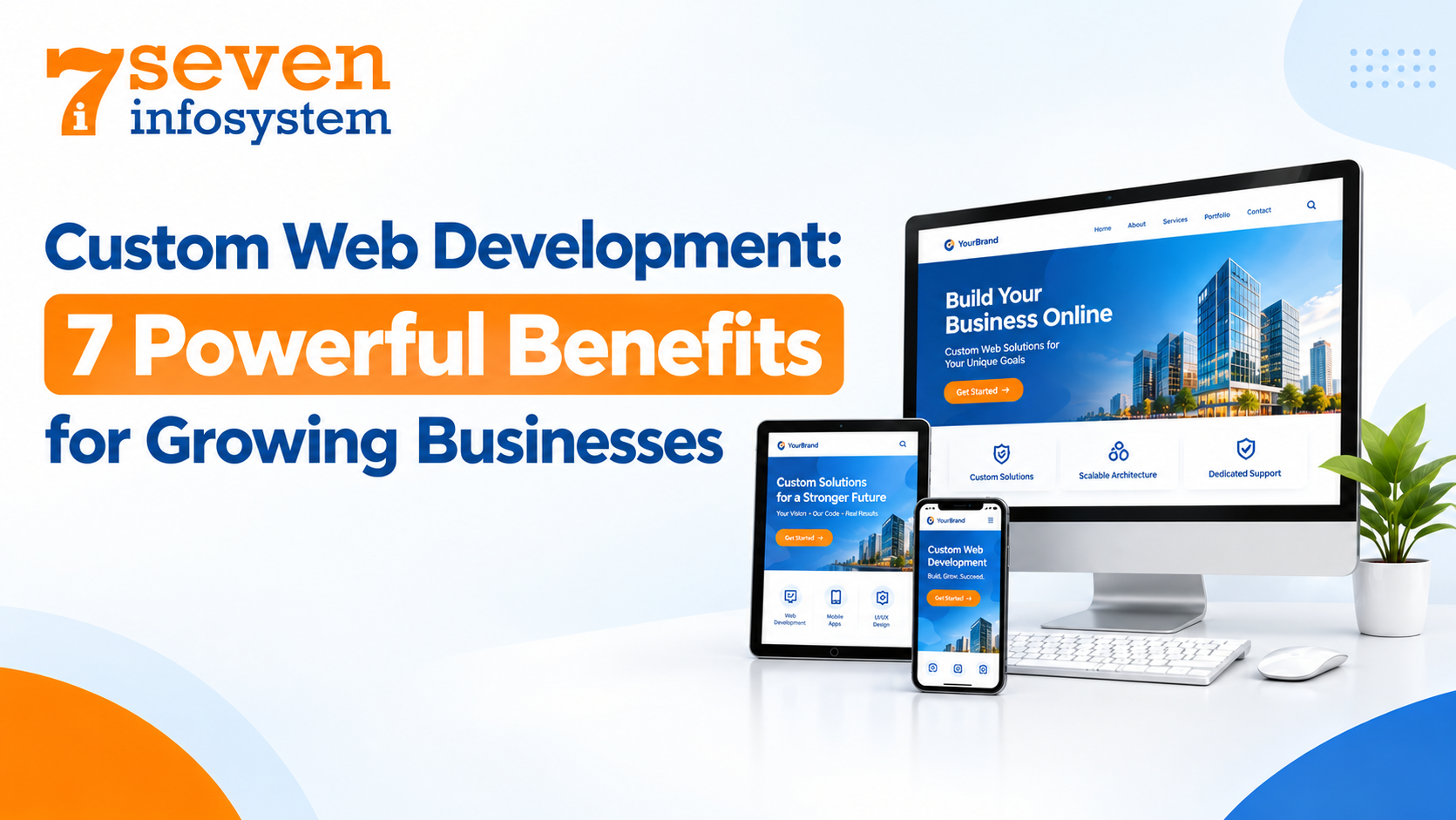
Custom Web Development: 7 Powerful Benefits for Growing Businesses
Explore 7 powerful benefits of custom web development, helping growing businesses improve performance, security, scalability, and user experience.
Introduction
First of all, your website serves as an initial point of encounter between potential clients and your company. Prior to calling your company, visiting your office or completing any type of forms, they check your website out and silently determine whether or not they consider your company to be trustworthy. In case your website is outdated, slow or difficult to use, a large number of visitors will simply close it and go to your competitors' websites.
When starting up, it is absolutely normal for a small company to choose pre-assembled templates for its website. However, when your company is growing, you will start to feel that something is missing. The template that once seemed "good enough" prevents you from adding such features as a booking tool, checkout process that reflects how people tend to buy and so on. This is when most entrepreneurs start considering custom web development as an option.
In this article, we will discuss what custom web development implies, why it is better than other solutions and seven main benefits that it brings. Also, we will give several useful pieces of advice that may help you pick a proper web development service.
What Is Custom Web Development?
Custom web development involves the creation of a website based on the requirements of one particular business entity. In this case, the developers do not begin with some ready-made template or theme and fit the content into the template. The web development company starts its work with the analysis of the goals of the customer, his or her workflow, etc., and develops a website meeting these specifications.
This approach may be compared to the difference between purchasing an already made suit and getting the same suit tailored. An off-the-rack suit fits perfectly at shoulders but leaves some space at the waist and in sleeves because it was made without considering any particular client.
The process of custom web development normally includes several stages:
Discovery and planning: learning about your business model, target audience, competitors, and objectives.
Design: designing page designs, color themes, and user experience based on your corporate identity.
Development: coding the front-end (what people visiting the site see) and back-end (the technologies powering the site).
Testing: evaluating the speed, security, compatibility, and mobile-friendliness of the site.
Launch and support: launching the site and updating it according to your changing needs.
In some cases, the projects are fairly straightforward and consist of designing a brochure-style website with a distinctive design. In other cases, custom web application development is needed: the websites have to include interactive applications, such as customer portals, booking engines, inventory dashboards, or quote calculators. Whatever your project is, the key characteristic is the same: it is designed specifically for your business.
Custom Web Development vs. Template-Based Websites
Templates and website builder software do have their uses. They are fast to deploy, relatively inexpensive, and work great for personal blogs or small-scale projects. However, there is a problem once the project becomes too large for them.
Below is a simple comparison of the two options.
Factor | Template-Based Website | Custom Web Development |
Design | Shared with thousands of other sites | Unique to your brand |
Features | Limited to what the theme or plugins offer | Built around your exact requirements |
Performance | Often slowed by unused code and plugins | Lean code focused on what you need |
Scalability | Can struggle as traffic and content grow | Planned to grow with your business |
Security | Popular themes and plugins are common targets | Tailored security measures |
Long-term cost | Lower at first, but add-ons and workarounds add up | Higher upfront, but fewer hidden costs later |
The main thing here is that a template will fit everyone in general. This means that it is versatile in a sense but never optimal for one company. On the other hand, custom solutions will always be aimed at solving specific problems of a client and will deal with the peculiarities such as a complex pricing system, multiple locations, and specific client onboarding procedure.
If your website acts as just an electronic business card, then a template should be quite enough. However, if you want to use the website for lead generation, order processing, and day-to-day management, then you might lose something in terms of time and customers because of this limitation.
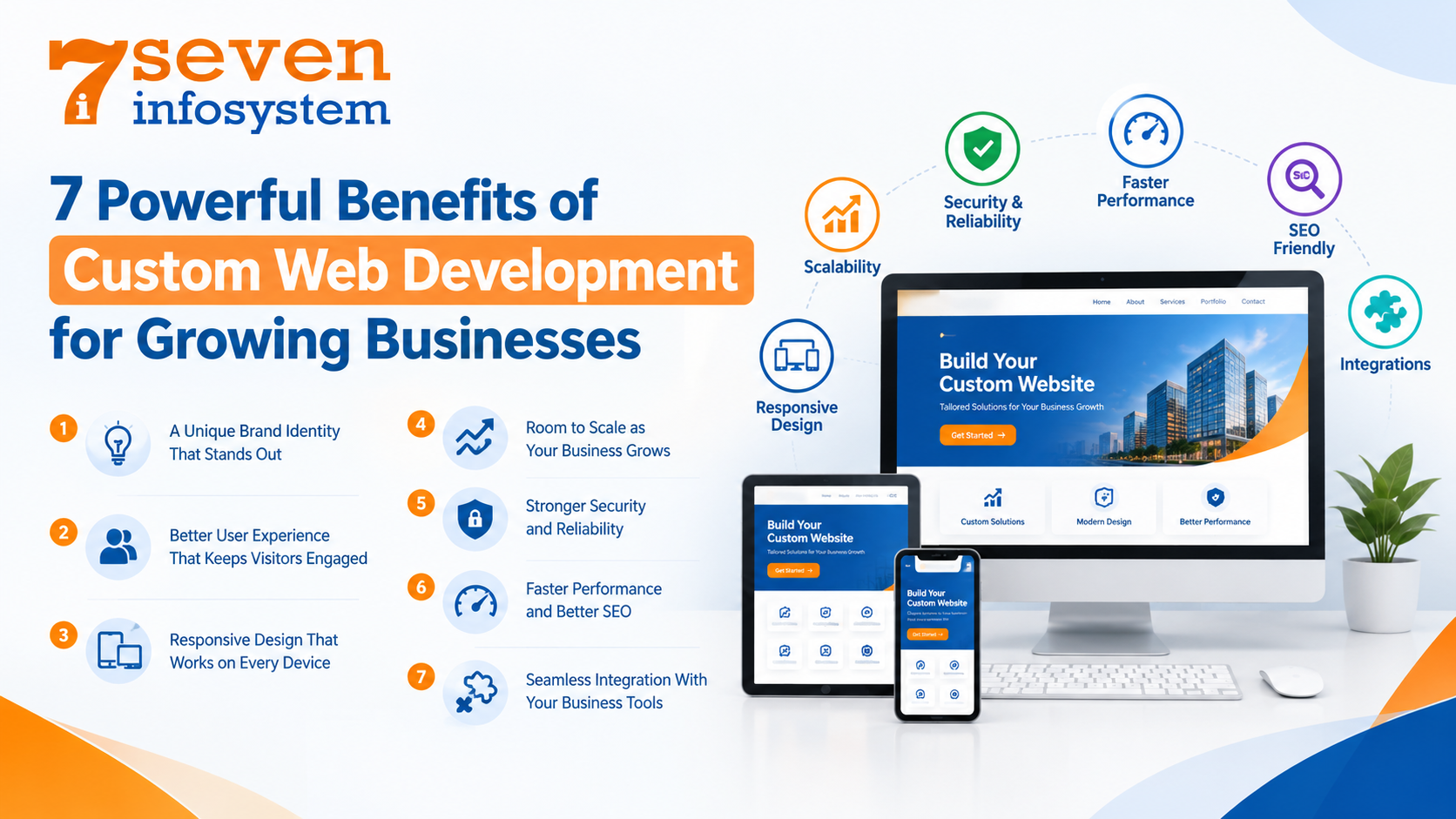
7 Powerful Benefits of Custom Web Development for Growing Businesses
But now we're going to get down to why so many businesses prefer to go for a custom solution. Here are the benefits of custom web design and development that go far beyond good aesthetics and influence user experience and business processes.
1. A Unique Brand Identity That Stands Out
When all websites have the same look, people find it hard to remember them. However, a custom website helps your business stand out from competitors. You can adjust every visual element to match your brand. These elements include fonts, colors, page layouts, images, and animations.
Good custom web design and development goes beyond choosing attractive colors. It also creates a consistent visual identity that reflects your brand's personality, values, and goals. As a result, visitors can easily recognize your business and remember your brand.
For example, a luxury travel agency can use plenty of white space and high-quality photos. Meanwhile, a tech startup may prefer bold colors and interactive elements. Similarly, an eCommerce business can use clear product images and simple navigation to attract buyers.
Moreover, a unique website design helps build trust with potential customers. When visitors see a professional and consistent design, they feel more confident about your business. Therefore, custom web development helps you create a memorable online presence and build stronger customer relationships.
2. Better User Experience That Keeps Visitors Engaged
The web is a fickle place where visitors cannot afford to waste any time searching for the information they need. This is why UI/UX design and usability in website development are powerful advantages of a custom website.
A custom website allows you to design the whole process of navigation, the layout of your pages, and calls-to-action according to the behavior patterns of your clients. Website developers will be able to trace the route that visitors take from the homepage to their destination – whether it is to book your services or make purchases – and eliminate all obstacles along the way.
It is often small things that determine the success of user-friendly websites: easy-to-understand menus, legible fonts, intuitive forms and helpful prompts.
3. Responsive Design That Works on Every Device
Today, most people browse websites on smartphones. However, customers also switch between tablets and laptops. Therefore, your website must work smoothly on every device. It should also adapt to different screen sizes.
Many website designs claim to offer mobile-friendly layouts. However, some simply shrink desktop content or arrange elements awkwardly. In contrast, responsive web design adapts the layout to each screen size. Developers ensure that images, buttons, menus, and text remain clear and easy to use.
Moreover, responsive design improves both user experience and SEO performance. Google uses mobile-first indexing to evaluate websites. This means Google primarily considers your website's mobile version for indexing and ranking. Therefore, a responsive website can help improve your search visibility.
4. Room to Scale as Your Business Grows
Growing your business is exciting; however, it also brings several challenges when managing your website. As your business expands, you may add more product lines, website pages, visitors, and features. Therefore, you need a strong website platform that can handle these changes smoothly.
Professional website developers consider your future business goals during the development process. They choose the right structure and technology to make your website scalable without requiring a complete redesign. For example, you may plan to launch an online store or add a customer login section next year. Similarly, you might need additional landing pages to reach customers in new regions. With custom web development, your website can grow alongside your business.
Moreover, professional website development makes future improvements easier. Features such as modular architecture, cloud hosting, and an advanced content management system allow developers to add or update website features efficiently. As a result, you won't need to rely on incompatible plugins or complicated workarounds to expand your website.
5. Stronger Security and Reliability
Cyberattacks pose a serious threat to every business, regardless of its size. In particular, widely used themes and plugins attract cybercriminals because a single security weakness can affect thousands of websites.
However, custom web development gives businesses greater control over website security. Developers write code according to specific business requirements, reducing dependence on widely used themes and unnecessary plugins. They can also implement essential security measures, such as secure payment processing, employee access management, data encryption, and regular security assessments.
Moreover, custom websites offer better control over reliability and maintenance. Developers organize the code efficiently, making updates and upgrades easier to manage. As a result, businesses can maintain a stable, secure, and reliable website as they grow.
6. Faster Performance and Better SEO
Your website speed plays an important role in user experience. Visitors don't like waiting for slow pages. If your website takes too long to load, they may leave and visit a competitor's website instead. Moreover, search engines consider page speed when evaluating website performance and rankings.
Many website templates include unnecessary plugins, scripts, and styles. These elements can slow down your website, even when you don't use them. Custom website development helps avoid this problem. Developers add only the features your business needs. They also optimize images, code, and page layouts to improve loading speed.
Furthermore, custom development makes technical SEO easier. Developers can optimize URL structures, heading tags, structured data, mobile responsiveness, and meta tags. These improvements help search engines understand your website content more effectively.
A faster website also encourages visitors to explore more pages. For example, customers can browse your services, read blog posts, and complete contact forms without unnecessary delays. Additionally, a well-structured website makes it easier for search engines to crawl and index important pages.
As a result, a fast and SEO-friendly website can improve user engagement, support better search visibility, and create more opportunities to generate leads and conversions.
7. Seamless Integration With Your Business Tools
Almost all fast-growing companies use a variety of software programs – CRM systems, accounting systems, inventory management systems, email marketing software, booking systems and other. But when they do not work together, then people in your organization spend a lot of time on manual copying of data from one program to another.
Custom software development allows businesses to integrate their websites with CRM systems, accounting platforms, inventory management tools, and other essential business applications. New inquiry will be sent right away into the CRM system. New orders on your website will change immediately the level of stock. And new booking will instantly show in your calendar.
It is exactly here where business websites pass from mere marketing tool to organizational improvement solution. Using web application development for business websites, you can automatize routine tasks, provide self-service to customers and gather the necessary statistics on performance of your website.
When Is the Right Time to Invest in a Custom Website?
Custom web development isn't for everyone from the very beginning. However, if you identify yourself with any of the following criteria, it's a good sign that it may be high time to go ahead with the idea:
Your current site can't do what you need. You get a frequent response, "that's not available with this theme" and use various plugins more and more.
Your site feels slow or unreliable. Your pages load too slowly, or something breaks after you update.
Your brand has evolved. The level of professionalism of your business has risen, and your website doesn't correspond to it.
You're spending too much time on manual tasks. You copy data from one system to another when they need to be integrated.
You're planning major growth. New services, new locations or marketing campaigns are around the corner.
In such a case, a wise investment in professional web development will bring you much less hassle and financial losses in the future. It's always easier to lay the proper foundation beforehand than to rebuild the website under pressure of growth.
How to Choose the Right Custom Web Development Partner
Your chances of success greatly depend on who you select to develop the website for you. Some basic criteria to consider when comparing web development firms include the following.
Review Their Portfolio Carefully
Don’t be deceived by nice screenshots. View their websites in action, and evaluate how fast they load, how user-friendly they are, and how responsive they are on your smartphone.
Ask About Their Process
The good team needs to have an approach to getting through the process of creating the site from idea to release. Ask how they do requirements gathering, how frequently they will keep you updated, and how they deal with feedback and changes. Communication is key to whether or not the project will go smoothly.
Check Their Technical Range
Your potential team should offer comprehensive modern web development services, including front-end development, back-end development, API integration, and ongoing support. And if your project requires special portals or tools, ask them about their experience creating them.
Focus on Value, Not Just Price
Choosing the least expensive option always sounds good, but cheapness often means compromises in the area of planning, testing, or even security. Compare the offers based on their value to you.
Conclusion
Your website should work as hard as you do. Although templates help you launch quickly, they may limit your growth as your business expands. Custom web development gives you a website that reflects your brand, attracts visitors, works smoothly on every screen, and grows with your business goals.
Moreover, custom development improves website security, performance, and integration with the software your team already uses. As a result, your website becomes more than just an attractive online presence. It becomes a powerful tool that helps you generate leads, save time, streamline business operations, and build customer trust through professional web development services.
Are you thinking about upgrading your website? Now is the right time to start. First, identify your business goals and the challenges you want to solve. Next, list the features your website may need as your business grows. Finally, choose a reliable web development partner who understands your requirements and can turn your vision into reality.
FAQs
1. How long does custom web development usually take?
Most custom websites take between 6 and 16 weeks, depending on the number of pages, features, and integrations involved.
2. Is a custom website more expensive than a template?
It usually costs more upfront, but it often saves money over time by avoiding paid plugins, workarounds, and costly rebuilds.
3. Can I update the content on my custom website myself?
Yes. Most custom sites include an easy-to-use content management system, so you can edit text, images, and pages without coding skills.
4. Will a custom website help my search engine rankings?
It can. Clean code, fast loading, mobile-friendly design, and proper SEO structure all give your content a better chance to rank well.
5. Do small businesses really need a custom website?
Not always at the start, but once you need specific features, better performance, or room to grow, a custom site becomes a smart investment.